
The story of the Buffalo
#KeWildlife – Story 15

The large vehicle was parked by an Acacia tree in the middle of the grasslands. The driver paid no mind to the trail he had left behind. He had bigger things on his mind. Dressed in khaki shorts and a green shirt, he stepped out of his Land Cruiser, adjusted his safari hat and examined the land.
A few zebras grazed in-between a herd of wildebeest in the distance. Giraffes stood tall further away against the few trees lining the horizon, and the water of a little dam glistened against the midday sun. The man adjusted the laces of his safari boots and strapped his firearm against his chest, then began his long walk to the thicket two kilometers away.
He arrived in less than half an hour, despite the sun’s efforts to wear him out. Tenacity was his motto, and to return to his homeland with an elephant’s tusk? He’d be the richest man in his country, if not the continent.
“Magical Kenya they say,” the man said to himself as he spotted the large elephant approximately 500m from him. He chuckled at his own words and stared at the large beast in both awe and greedy desire.
Then, he unfastened his firearm, set the bullets and then lifted the gun to his shoulder.
The beast stood still, unaware of the nearness of its death while the man tried to decide where to shoot at first - the elephant’s legs or abdomen. He settled on the abdomen – four shots and the beast would collapse.
He counts.
"Ready, set…."
Suddenly the ground shakes. The man is caught unaware, and his firearm drops from his loose grip. Something runs in the bush around him. He hurriedly picks up his firearm ready to put an end to whatever beast has interrupted his hunt. He waits, as silence ensues.
Just then, out of the thicket, a massive animal comes running, its head bopping up and down. Horns? The man can barely make them out. He feels a sharpness against his ribs, then another. The man falls to the ground – firearm still in hand.
-
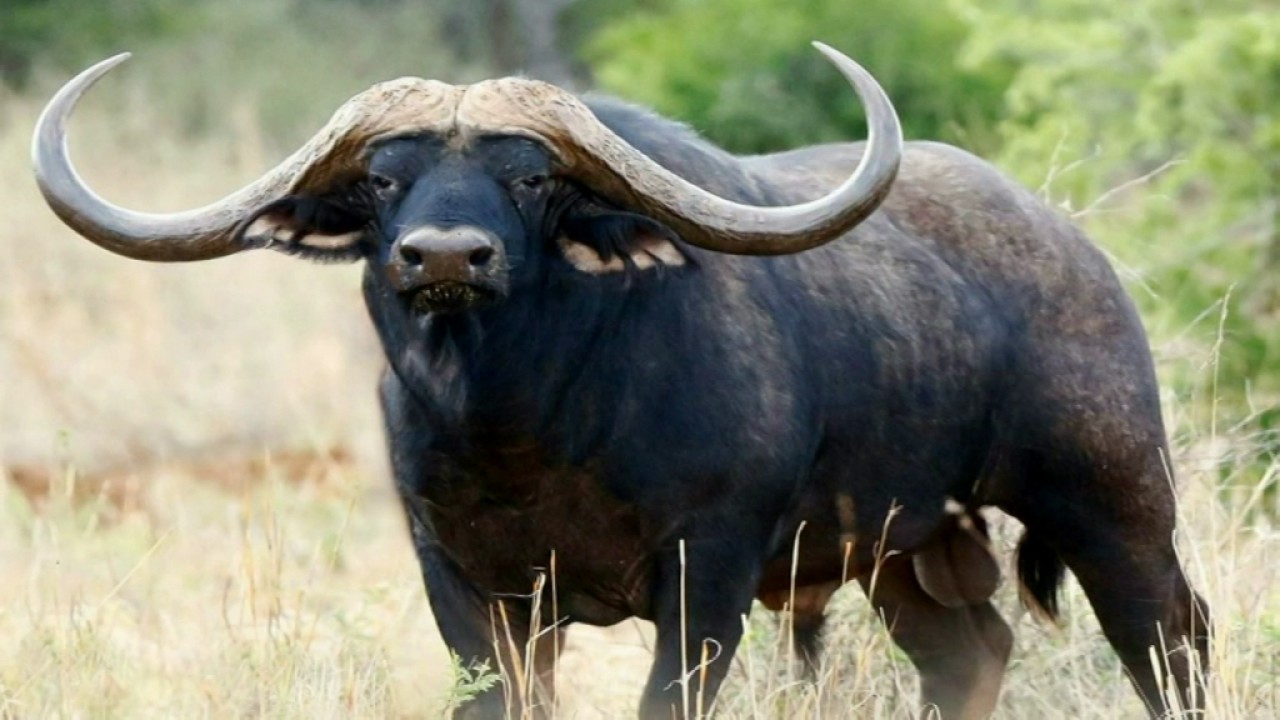
You see the thing with the African Buffalo is it senses danger from a mile away. It seems like an unlikely attacker if you judge it at first glance, but its defence against enemies and intruders is mounted squarely at the top of its head; horns longer than a man’s arm. If provoked, it lowers its head and pierces its opponent. Much like the elephant, the buffalo isn’t a predator but an animal that gets overly aggressive when enraged – and when it attacks, the opponent’s only hope is speed.
Woe unto you if you come across the lone buffalo. Considered one of the most dangerous animals in the wild, even its own kind steer clear of him.
The hunter in the story above lies on the ground sprinkled with dust. The buffalo has done what it needs to do to protect his territory.
It’s no wonder this ferocious animal is one of Kenya’s big 5 – a true ambassador of defence!

The story of the Lion
#KeWildlife – Story 10
Angurumapo simba, mcheza nani?
A lion’s roar is so distinct, you’ll know it without thinking twice! Once you hear it, no matter how far or near it sounds, you’ll inevitably hold your breath while you attempt to make sense of the direction from which it came. Whether you decide to wait or make a run for it is completely up to you.
Simba, Panthera Leo or Lion – all are names of one of the most feared animals in the world.
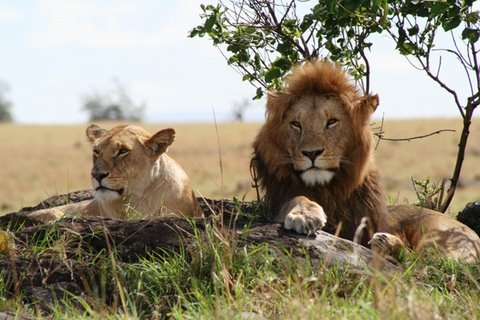
Lions live in prides, and are the only big cats that live this way. A pride, is essentially equivalent to a clan in that it consists of one to three male lions – that act as the alphas of the pack, twelve lionesses – responsible for reproduction and hunting, and the cubs of the pride.
The male lions attain their pride by overthrowing another alpha male that leads a pride. In an interesting game of loyalty, the pack follows their new alpha because of his show of strength. In some cases, the younger male cubs, grow up to overthrow the alpha and kills off all the alpha’s cubs as part of his personal initiation to alpha.
Then there’s the heart of the pride – the lionesses, who are responsible for feeding their prides. They often spend at least 4 hours a day hunting zebras, antelopes and ‘medium-sized’ herbivores. They hunt in packs because most of their prey are faster than they are – and group effort results in greater hunting success. The lionesses of the pride are all related which would probably explain their team work in hunting.
The final group within the pride are the cubs. These young ones do not go hunting until they are at least a year old, and while the female cubs grow into members of the pride, the male cubs grow into potential alphas and thus leave their original pride to go and start another. Once they do, they defend their pride territory by marking their boundaries with urine and chase off animals that dare encroach their self-designated area. Sometimes a roar can be heard and it often means that an alpha lion is scaring away intruders.
Angurumapo samba, mcheza nani?
The least known about these male big cats is that they are absolutely notorious when it comes to hunting. While the lionesses are the true hunters, the males who decide to hunt often steal kills from hyenas and wild dogs. Nonetheless, lions have been acknowledged throughout history for their bravery and strength – The King of the Savannah. However, given that the lionesses are the actual breadwinners of the family, perhaps they should take the title?