The story of the Ostrich
#KeWildlife – Story 19

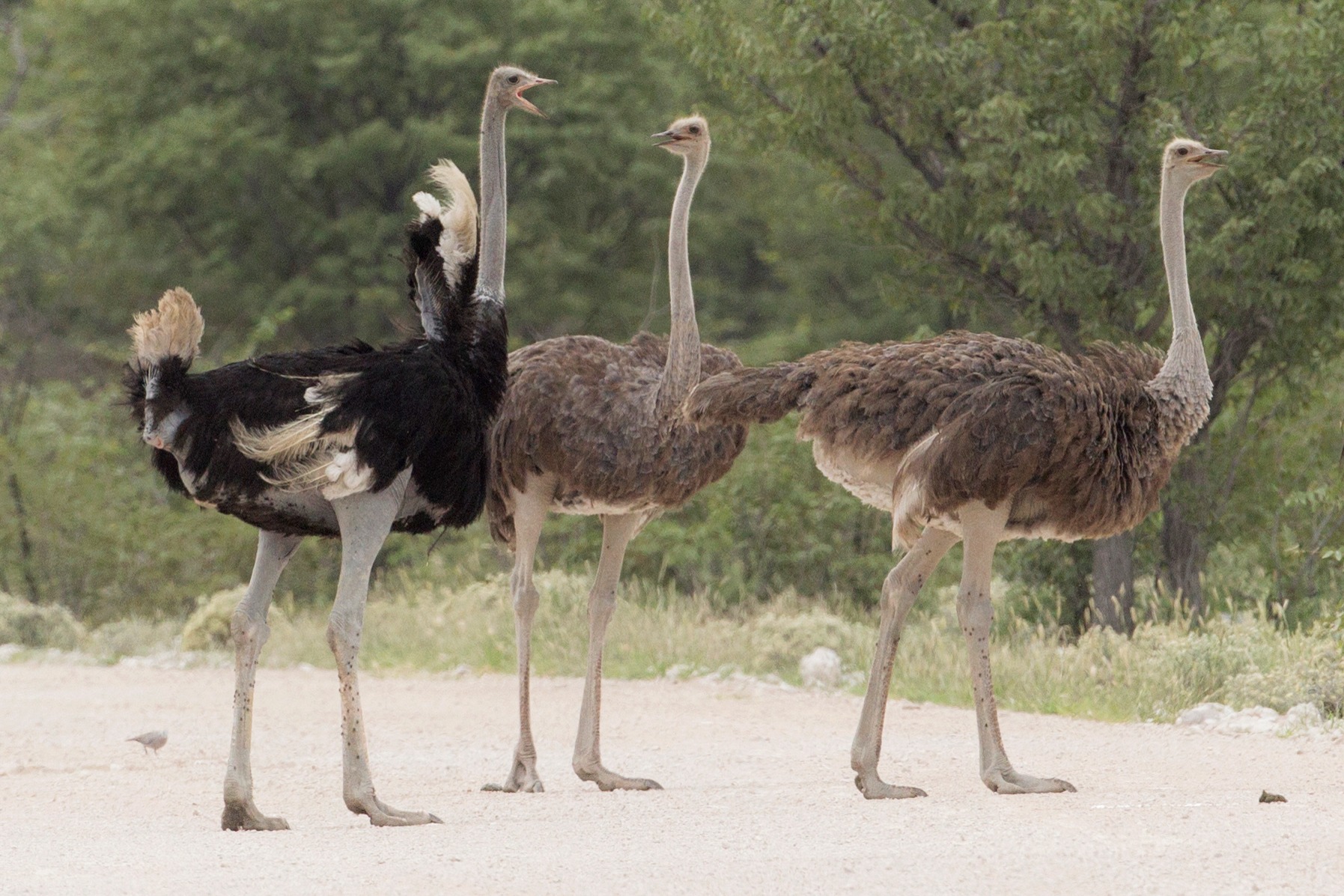
Did you know that there’s a significant difference between a male and female ostrich? The male ostrich is taller and boasts black feathers with an outer strip of white and is referred to as a rooster, while the female ostrich has a dull brown coat and is referred to as a hen.
Gender names aside, these birds are synonymous with the definition of large: their big bodies, large eyes and even large eggs. Perhaps the most awe-striking feature would be their appearance. They have crowned themselves as the land animal species with the largest eyes; each eye is at least 5cm.
An ostrich diet shows the diversity in what birds eat. They are known to devour rodents as well as locusts and lizards, but they are also known for their love of plants and roots. At the very least they can be described as omnivores.
The most interesting aspect of these birds is their mating habits. Usually a male ostrich will bow and flap its wings outward to display its plumage. This is done to get the female’s attention. When the rooster is ready to mate, its beak and sheens will turn bright red, and sometimes, his neck will change into the same shade of red. Hens on the other hand are able to change their feather colour to a shade of silver. When the eggs are laid, they are placed in a communal nest that can hold up to 60 eggs at one time. Both male and female ostriches can sit on the eggs until they hatch, they take responsibility in taking care of the eggs. The hatching period takes, on average, 40 days. By six months, the chick is almost at its full grown height, and at 4 years it will have reached maturity. Ostrich chicks are larger than any other birds; at birth, they can be as big as full grown chicken
Of note is that an ostrich can live a long life from between 50 and 75 years, and in this time they can maintain their running speed of about 70kph.
Domesticated ostriches can be found in plenty at The Maasai Ostrich Farm in Kitengela that was founded in 1991. Here visitors have the opportunity to observe and, for the daring ones, ride these large bird species.

The story of the Olive Baboon
#KeWildlife – Story 1
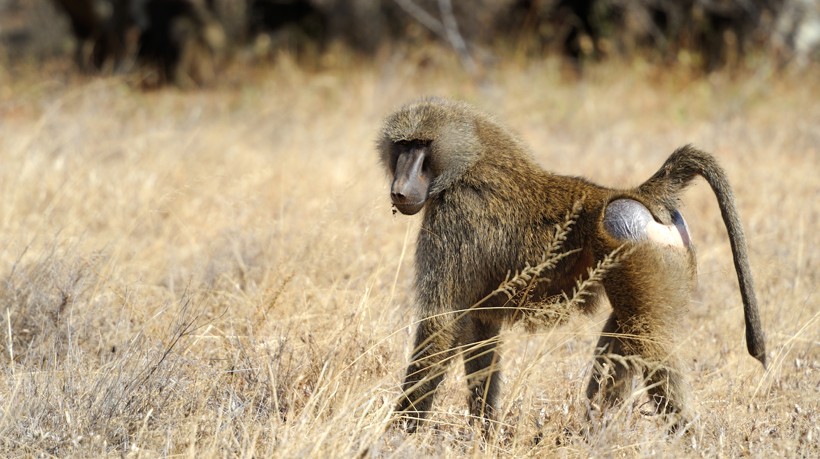
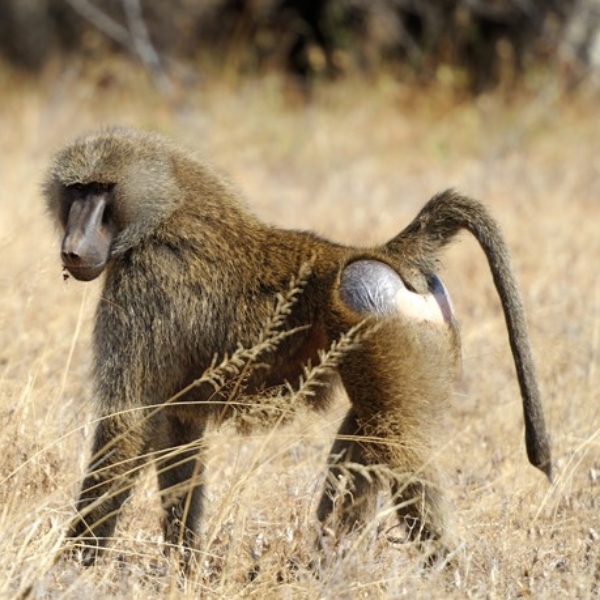
It’s no surprise that the strangest part of a baboon is its bright pink bottom. Which begs the question, how did it get that way?
Well...
Hadithi Hadithi?
A long time ago the baboon deemed itself the guardian of all watering holes such as dams, lakes and swamps. They were angry looking animals and at every water body one or two stood guard to defend its territory against other animals.
One hot afternoon a donkey walked by intending to take a drink from the dam that was guarded by one fierce baboon. As the donkey bent its head to take a drink of the cool water, he heard a shout.
“What are you doing?” demanded the guardian baboon.
“I’m just taking a drink of water for I am thirsty,” replied the donkey.
“If you want to drink the water you must fight me for it!”
And so began the brawl between the two animals. Punches and bites that left them both with bruises. Finally, the thirsty donkey grabbed the baboon by his neck and threw him against a big rock. The baboon landed with a thud, scraping off the fur on his backside and leaving his bottom exposed – a bright shade of pink.
The donkey drank his water and went about his day.
As for the baboon, he lived to tell the story of his shameful encounter with the donkey – and since then all baboons from his lineage came to be in the same form; angry looking and covered in fur all around with the exception of their bottom.
*
The Olive Baboon has a thick hairy coat of yellow, black and brown hairs throughout its body. Its alternative name is Anubis baboon, a name derived from the Egyptian god, Anubis, from which this baboon is said to resemble in more ways than one.
With pink bare bottoms, the baboons rely on their hairy tails for comfort, and thus cannot use them to grab or hold objects. These mammals do, however, have magnificent sensory skills and can smell, hear or see approaching threats. They actively search for food; feeding on both meat of dead birds and plants in the areas where they are found.
Speaking of habitats, Olive baboons are found in 25 countries throughout Africa extending from Mali in the West to south of our border. If you’d like to see an Olive baboon chilling in the afternoon or going about its day, we suggest a trip to Ol Donyo Sabuk National Park or the Nairobi National Park.
#KeWildlife