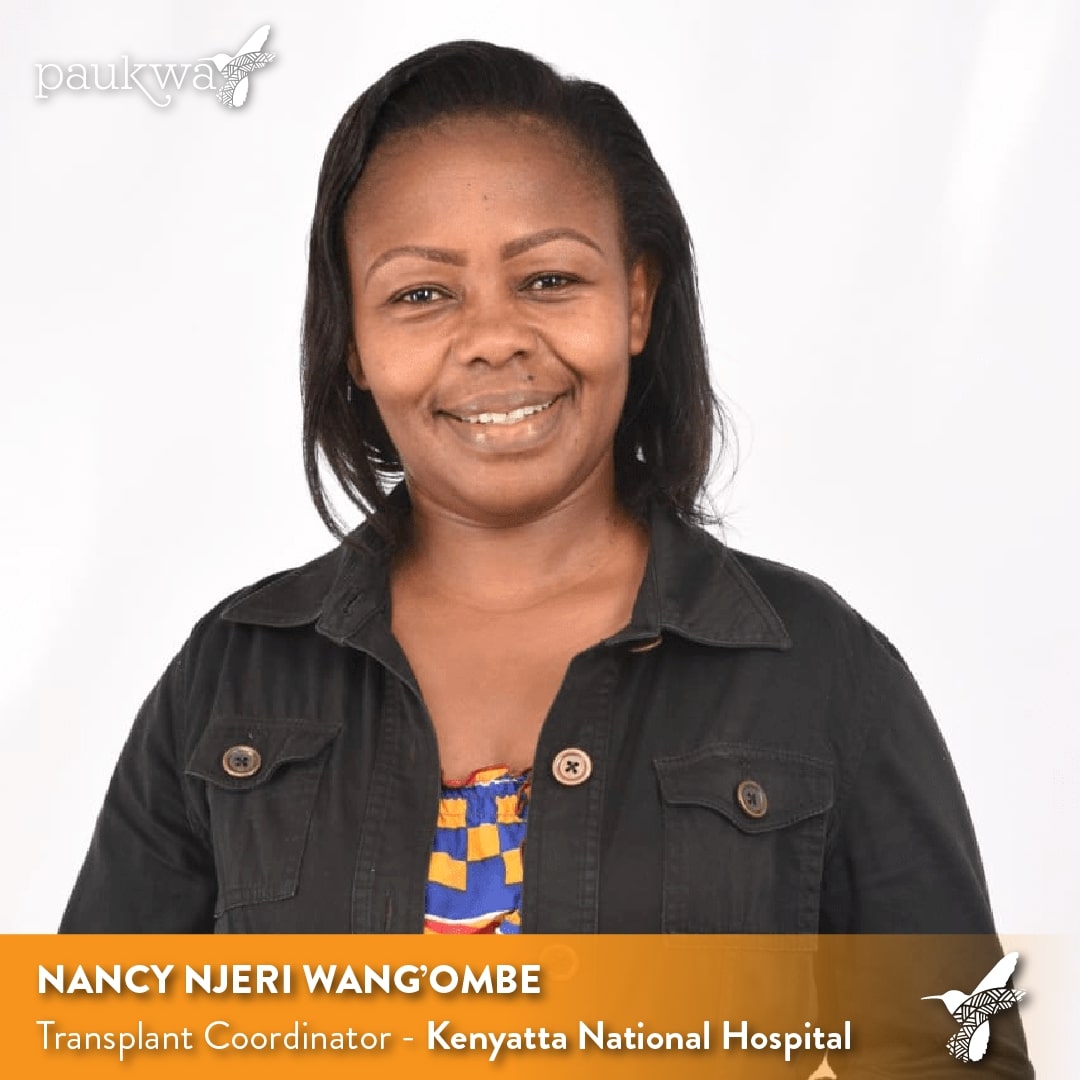
Nancy Njeri Wang'ombe - Pushing Boundaries

Nancy Njeri had never thought of becoming a health worker. Her father, who was an agricultural officer in their hometown in Laikipia, passed away when she was three. But this did not mean he was absent from her life. Her mother and her relatives kept his memory alive by telling Nancy stories about what an amazing man he was. Through these stories, her father became such a legend in her eyes that she wanted to become just like him when she grew up.
In 1993, Nancy sat her KCSE exam at Muhotetu Girls’ Secondary School. Her resolve to become an agricultural officer was unwavering, and she had applied to the University of East Africa, Baraton for a BSc in Agriculture. Instead, Baraton enrolled her for a degree in education, a choice that was completely unacceptable to Nancy. Her aspiration had been brought to a grinding halt and she was unsure of how to change gears. Her uncle, who was a father figure to her, shared in her frustration but believed that Nancy was a bright girl who could pursue any career she wished. Since she was adamant about becoming a teacher, he suggested that she give nursing a try. Grudgingly, Nancy agreed, and in 1996 she joined Nyeri Provincial Hospital General Training College.
Even though it was not the career she had desired, Nancy began enjoying her coursework in nursing. In class, she learnt about the human anatomy, classification, and administration medicines, and most importantly, caring for patients as they recuperated. Ward rounds were the most difficult of her classes since they were so labor-intensive. Despite this, Nancy enjoyed spending time with the patients, and so she began to draw her strength from those she was treating.
Three years later, Nancy graduated from college and was applying to various hospitals for her internship. After her experience at the wards in Nyeri, she had made up her mind to become a public health nurse rather than a hospital nurse. Public health nursing would give her the opportunity to visit different places and help people improve their health to prevent disease while being a hospital nurse meant that she would have to work in the wards she dreaded, giving care to those visiting the facility. But there were no postings for public health nurses at the time. By this time, Nancy had learnt to trust the outcome of things even when they went contrary to her plans. So in 2000, when she got posted to Kenyatta National Hospital as a staff nurse, Nancy decided to go with the flow.
Before working in the renal ward at KNH, nurses are required to have undergone specialized training offered exclusively by the hospital. At the time of Nancy’s posting, this particular ward was understaffed, and Nancy was required to become an extra set of hands until trained nurses were employed. What started out as something temporary became the core of her work. When she was on duty, Nancy would prepare patients for dialysis before taking them through the process. She was thrown in the deep end but managed to keep her head afloat and learned the skill on the job. In 2005, she formalized her training by enrolling for higher diploma classes in renal nursing.
From the first day, Nancy enjoyed her work as a renal nurse. In the course of time, she developed deep meaningful friendships with many of the patients who visited the hospital. In 2010, KNH began expanding its transplant services, and with the rising number of patients, someone was needed to coordinate the transplants that took place. When Nancy was chosen for the job, she decided to boost her skill set by enrolling at the University of Nairobi for a Bachelor’s degree in Nursing.
By the time she was graduating in 2013, she had become the point person within the facility for all transplant activities. The hospital administration was so pleased with how she conducted her work that they encouraged Nancy to apply for a postgraduate degree at the University of Barcelona in Spain. The next year, Nancy was halfway across the world pursuing a Master’s degree in Donation of Organs, Tissue and Cells for Transplantation courtesy of Kenyatta National Hospital.
Nancy enjoyed her time in Spain. Despite being one of two Africans in the class, she was never made to feel like an outsider. Everyone was so friendly, and she loved interacting with people from various backgrounds of health workers who had chosen to become transplant coordinators. In 2015, Nancy Njeri Wang’ombe graduated from Barcelona University. She was one of the few health workers on the continent and the first in Kenya to train in transplant work.
As a transplant coordinator, Nancy spends her day with patients in need of kidneys. From the moment a patient comes into Kenyatta National Hospital for a kidney replacement, they are under Nancy’s care. She first takes them through patient education so that they understand what a transplant entails, then assign them to social workers who will deal with them individually. Nancy monitors and evaluates the needs of the patients every step of the way until a donor match is found. Before the transplant, she starts both parties off on the necessary medication and follows up after the surgeries to ensure that the recovery process is as smooth as possible for everyone involved.
Nancy’s love for her patients radiates through her work. Today, we celebrate her not only as a health worker but as a pioneer in her field.

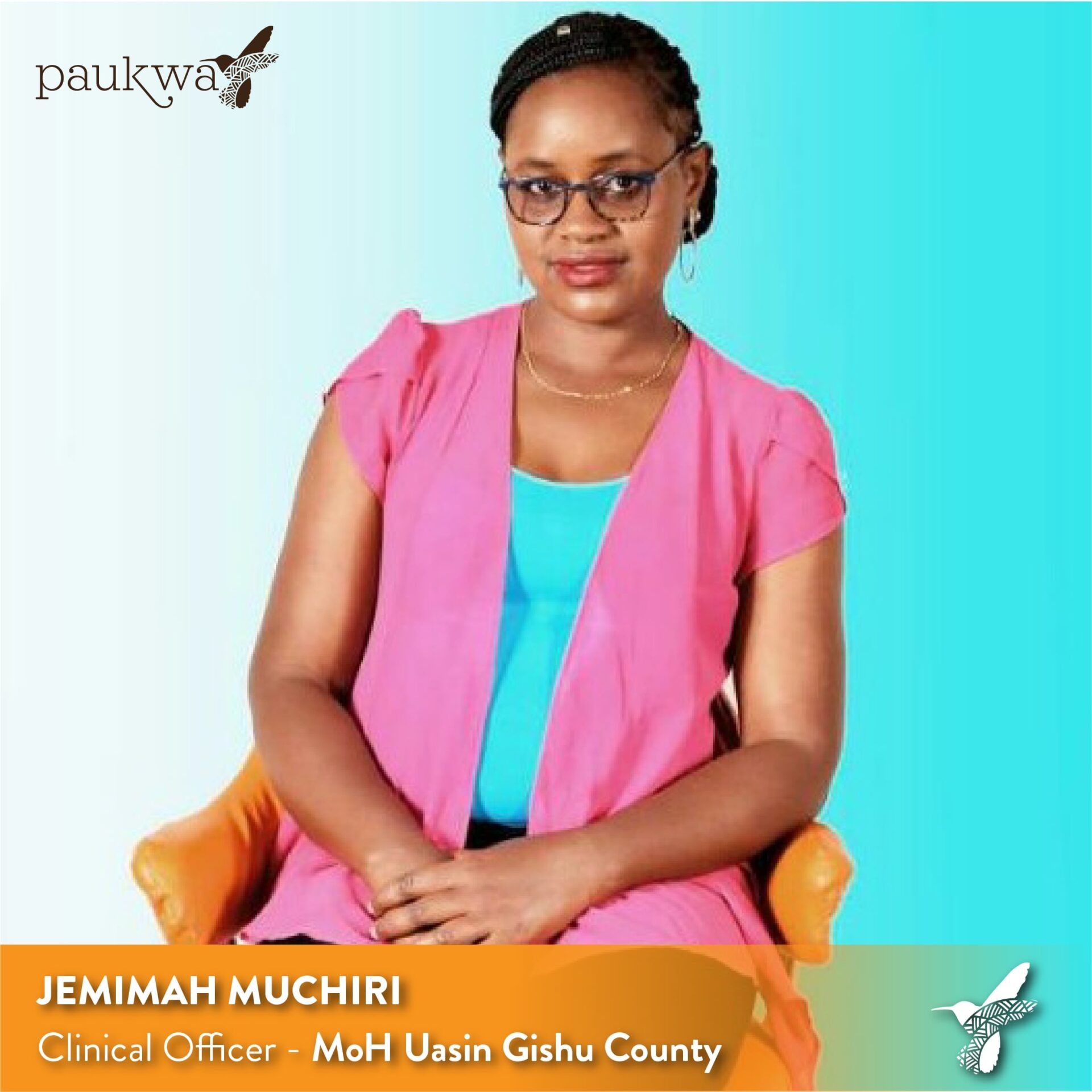
Jemimah Muchiri - For the Good for the Community
Christmas season in 2007 was like any other for Jemimah Muchiri and her family. Theirs was about food, celebration, and laughter, and as was tradition, these Christmas festivities took place at their Kapsoya home in Eldoret town. Jemimah was always excited to spend time with her family but that year she was especially excited to get back to school because it would be her final year at Ndalat Gaa Girls' Secondary School in nearby Nandi Hills town. What had begun as a fun-filled holiday turned into a nightmare when post-election violence started on 27th December, two days after Christmas. Jemimah and her family were forced to take refuge at a nearby Catholic church. They would walk to the church every evening, bringing food and a change of clothes with them, then leave for home in the morning.
Even as the new year began, there seemed to be no end in sight to the chaos. The Nandi region was marked unsafe and Jemimah couldn't go back to school. When her family received word that some of their neighbours and extended family had lost their lives in the chaos, her parents left nothing to chance. Jemimah was sent to Nakuru to stay with her elder sister until things calmed down. On 28th February, the manic wave tided, but the trauma of what had happened was too intense. Her parents transferred her to Njoro Girls’ High School in Nakuru. During enrollment, Jemimah found out that not only was she going to be the new girl, but she was going to have to repeat form three since registration for KCSE was already complete. While the push back was embarrassing for her, she knew it was a compromise she had to make for her safety.
 In 2009, she successfully completed her high school exams and was ready to get into university where she would pursue her long-time dream of working in health. She had time and time again expressed this desire to her family. The following year she was called to Egerton University to study Economics. This was not what Jemimah expected nor what she wanted. Her family had been supportive even at this time when her dreams seemed to slip from her grasp. One evening, her sister got home from work with a newspaper in hand. She pointed out an advertisement by Kenya Medical Training College inviting people to apply. The deadline was a day away and this made Jemimah hesitant. But her sister encouraged her to try, so Jemimah quickly drafted an application letter and sent it in by mail.
The hard part was the wait that followed. She spent months anxiously waiting to hear back. Finally, in October, a letter arrived congratulating her on a successful application.
When she told her family the good news, no one was more excited than her father, but his joy was laced with anxiety. How would he pay the tuition fee? The cost of schooling at KMTC was thrice as much as Egerton, and neither he nor her mother was able to afford it. Jemimah shared this news with another one of her sisters. She’d decided to defer her studies for a year hoping that by the next call, she would be able to afford the fees. As always, her family was relentless in ensuring she achieved her goal. Her sister offered to step in financially and paid more than half of the expected amount. In less than a week, all the requirements had been checked off the admission list and Jemimah joined KMTC - Nakuru Campus for a Diploma in Clinical Medicine and Surgery in 2010.
Jemimah enjoyed her coursework at KMTC which involved learning about the diagnosis of different diseases, prescription of medication and seeing patients through the treatment process. After completing her studies in 2013, Jemimah was posted to Kapenguria County Referral Hospital for her internship. Two years before, the country had experienced the worst drought recorded in sixty years, and the aftermath was still being felt in this small town. Many people came to hospital suffering from various diseases caused by malnutrition, and Jemimah did her best to help them regain their health. After her internship, when Jemimah earned her license and became a registered clinical officer, she stayed in Kapenguria for another year to attend to more patients.
In 2015, ready for change, she moved to Nairobi. In the capital, all the jobs she found were temporary, lasting no more than a few weeks. She returned to the place where she had taken refuge during the violence but again, Nakuru didn’t do it for her. She craved stability, and so when she came across a job vacancy for a clinical officer at Uasin Gishu County, she seized the opportunity and worked on her application keenly trusting that she would get the job. It seemed that she was to return home after all. In July, Jemimah relocated back to her home county after being away for so long. Today you will find her busy at Burnt Forest Sub County Hospital where she works with a team of other health workers for the betterment of the community’s health.
Jemimah’s journey has come full circle and we celebrate her steps to becoming a #KeHealthWorker.
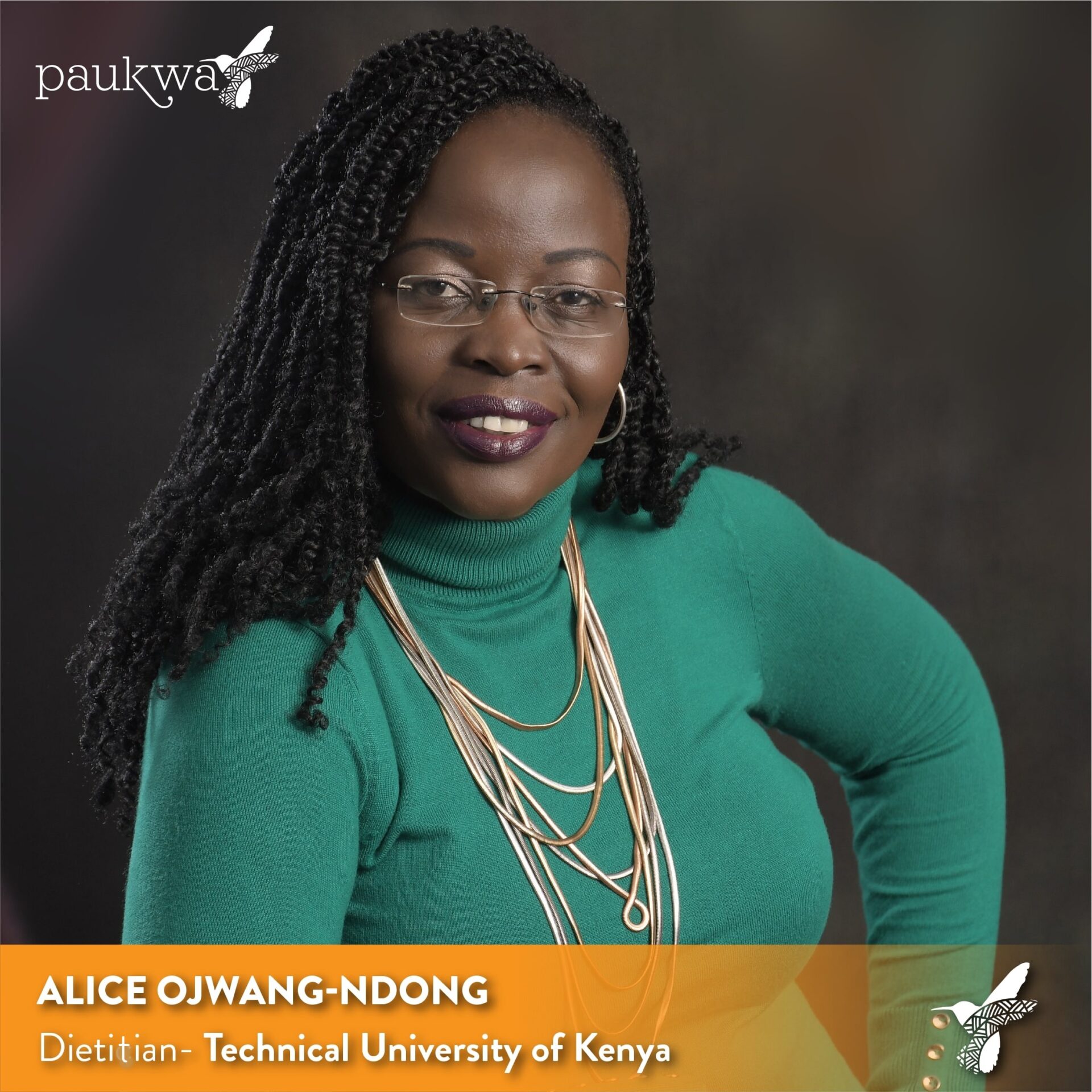
Alice Ojwang-Ndong - The Educator Dietician
Alice Ojwang was brought up around health workers. On days when her relatives gathered in her parents' home in Nairobi, conversations revolved around health matters. Alice would listen in on these discussions with the interest of an inquisitive child. When she joined Lwak Girls’ Primary Boarding School in lower primary, she cheered herself up by thinking of these times on days when the homesickness was too much to bear. But with not much choice, she opted to persevere. Soon enough, she adjusted to life in Siaya County and proceeded on to the school’s high school. As KCSE neared and with it information on tertiary studies and the careers possible, she had come to the decision that she would follow in her family’s footsteps and work towards becoming a health worker.
 Exam results were scheduled to come out in 1993 and as expected they did. Alice sat hopeful, waiting for the ticket to med school. She was shattered when she found out her were below the cut off mark to study medicine. She turned to her family and they urged her toward nutrition. She joined Kenyatta University the next year to study Home Economics. The course was unlike what she imagined, but she was exposed to the curative aspects of nutrition, and even did her industrial attachment at Kenyatta National Hospital. She enjoyed working with patients and the results from those she worked with made her work all the more satisfying.
In 1998, Alice graduated and began the job search. Unfortunately, there were no vacancies for nutritionists at any facility she walked into. When the job hunt wore her out, she considered volunteering; after all, what was important was building her work experience. She started out at Childlife Trust. Meanwhile, her proactive spirit never dimmed. She particularly sought a job at Kenyatta Hospital, and after twelve months of rejection, she was finally employed as a nutrition officer.
Some of Alice’s most frequent patients were malnourished. She was required to prescribe diets that would improve their health – and the results could only be measured as weeks progressed. When eventually they did, she was ecstatic and motivated to do more for their well-being. After working at KNH for two years, she was ready to help patients on the other end of the spectrum, and so she joined Roche Pharmaceuticals as an obesity trainer. The company had just launched a new drug that helped those struggling with obesity to curb their unhealthy cravings and promote weight loss. But the medication would not be effective on its own. They required a specialist who could design health programs for people suffering from obesity. In addition to employing Alice as an obesity trainer, Roche Pharm set her up with a private practice which she could use to see and educate patients. The practice was called Xenihealth Nutrition and Weight Loss Management Clinic, and operations began in 2001.
The following year, Alice strengthened her skill by going back to school. She joined Stellenbosch University in South Africa for a Master’s degree in Nutrition. Her clinic was still under the Roche Pharmaceuticals’ umbrella and she was confident that despite her absence, the work would continue as usual. She returned home in 2005 and was back to work but with an added hobby. Her time in SA allowed her to travel and this was what she wanted to do. Over the ten years that followed, Alice travelled to different parts of the world where she learnt more about nutrition and dietetics. She would bring the wisdom back with her, teaching her fellow nutritionists everything she’d absorbed. She found that she enjoyed teaching people and helping others sharpen their skills with all the knowledge she had acquired. Alice, therefore, decided to become a part-time lecturer at the Technical University of Kenya in 2013.
By 2015, teaching had become such an integral part of Alice’s life that she decided to make it her full-time job. But first, she needed to tie up the loose ends in her existing career. She shut down Xenihealth and joined North West University in South Africa to earn her doctorate in dietetics. After graduating in 2019, she returned to the Technical University of Kenya, where she currently teaches students enrolled in the Department of Human Nutrition and Dietetics. Her goal is to prepare the next crop of dieticians to take the mantle.
Asante sana Alice for your efforts to improve health from the inside out. We commend your Paukwa spirit!