
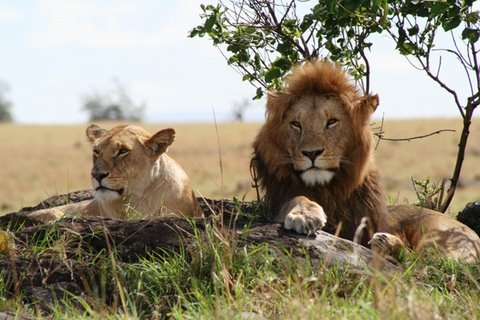
The story of the Lion
#KeWildlife – Story 10
Angurumapo simba, mcheza nani?
A lion’s roar is so distinct, you’ll know it without thinking twice! Once you hear it, no matter how far or near it sounds, you’ll inevitably hold your breath while you attempt to make sense of the direction from which it came. Whether you decide to wait or make a run for it is completely up to you.
Simba, Panthera Leo or Lion – all are names of one of the most feared animals in the world.
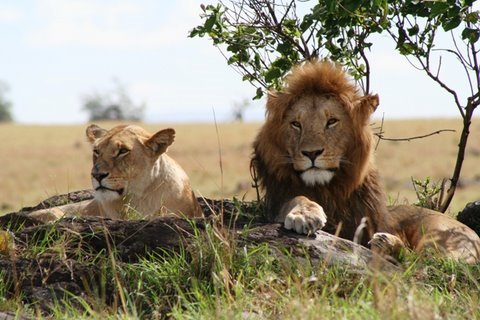
Lions live in prides, and are the only big cats that live this way. A pride, is essentially equivalent to a clan in that it consists of one to three male lions – that act as the alphas of the pack, twelve lionesses – responsible for reproduction and hunting, and the cubs of the pride.
The male lions attain their pride by overthrowing another alpha male that leads a pride. In an interesting game of loyalty, the pack follows their new alpha because of his show of strength. In some cases, the younger male cubs, grow up to overthrow the alpha and kills off all the alpha’s cubs as part of his personal initiation to alpha.
Then there’s the heart of the pride – the lionesses, who are responsible for feeding their prides. They often spend at least 4 hours a day hunting zebras, antelopes and ‘medium-sized’ herbivores. They hunt in packs because most of their prey are faster than they are – and group effort results in greater hunting success. The lionesses of the pride are all related which would probably explain their team work in hunting.
The final group within the pride are the cubs. These young ones do not go hunting until they are at least a year old, and while the female cubs grow into members of the pride, the male cubs grow into potential alphas and thus leave their original pride to go and start another. Once they do, they defend their pride territory by marking their boundaries with urine and chase off animals that dare encroach their self-designated area. Sometimes a roar can be heard and it often means that an alpha lion is scaring away intruders.
Angurumapo samba, mcheza nani?
The least known about these male big cats is that they are absolutely notorious when it comes to hunting. While the lionesses are the true hunters, the males who decide to hunt often steal kills from hyenas and wild dogs. Nonetheless, lions have been acknowledged throughout history for their bravery and strength – The King of the Savannah. However, given that the lionesses are the actual breadwinners of the family, perhaps they should take the title?

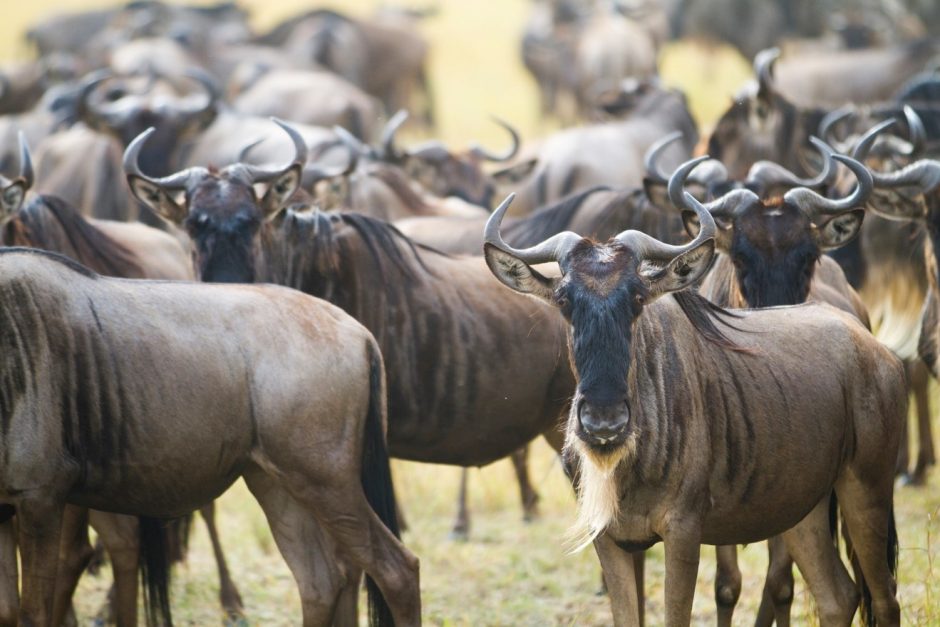
The story of the Wildebeest
#KeWildlife - Story 9
Every year, between May and July, the plains of Kenya are transformed in a wondrous way. We could credit this amazing phenomenon to our geographical location - we got lucky and the world travels to our country to experience this first hand.
Visualise a great herd, thousands moving together as one from the Serengeti plains in Tanzania to the Maasai Mara in Kenya.
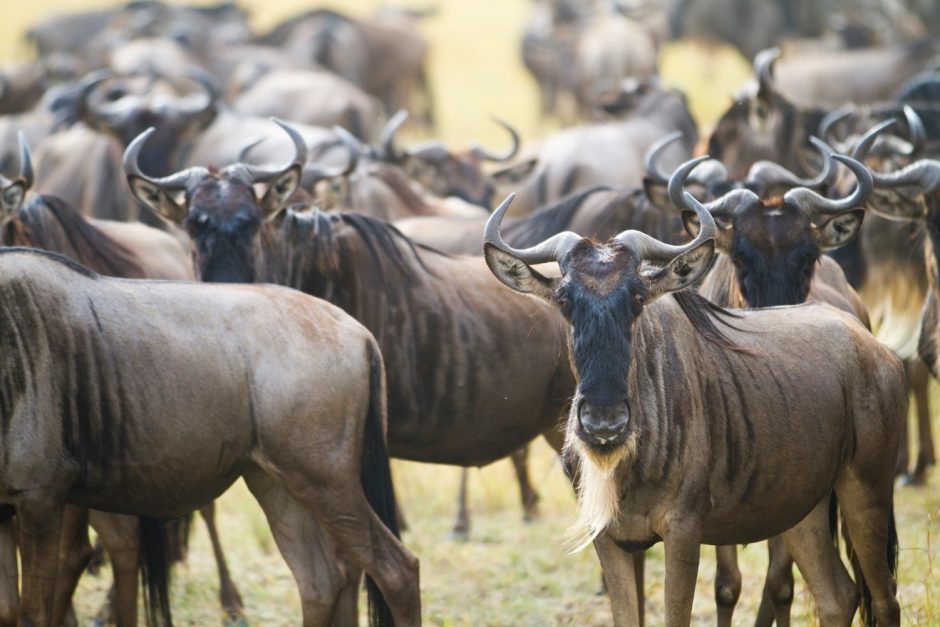
The wildebeest is one of the antelope species, well known for their dark coat and odd humpbacked appearance.
Grassy Savanna’s and open plains are the every day habitat for this group. However, the prep to migrate is something the herd anticipates every year. Unlike most communities, the gnus - or wildebeests - migration is different. While people would roam in search of greener pasture every year in revered history, these animals only know of two locations: one for the first season and the other for the second season in their animal years. We imagine that before the season dawns, many are prepared to bolt and that could mean survival (for most), and demise for the unlucky. Either way, this is a tradition or instinct that has been followed through since time immemorial.
So when the time comes more than 1.5million wildebeest are in motion in an enormous loop. It’s a run as though being chased by imaginary danger yet danger lies in their path as when the animals cross the watery zones inhabited by Nile crocs.
But not all wildebeests that die fall to the fangs of these predators, the weakest of the group may slow down and thus be trampled on by the rest of the herd. The migration isn’t just a movement to a more relaxed land, it is survival of the fittest. Literally! The unlucky in the water zones contribute to the croc’s luck, serving as the carnivore’s meal of the day. This by far goes to show that although this movement is an anticipated one by the world, it also contributes to the animal kingdom’s food chain.
Speaking of the movement, the herd which includes other herbivores such as zebras, covers approximately 3000 kilometers during the migration. The herd will then move clockwise, back south to the Serengeti and so on.
The migration is a sight to behold and brings lovers of wildlife on safari to the Kenyan-Tanzanian plains. So each year, tourists, journalists, nature gurus and others that look forward to this natural event, journey with the wildebeests in fascination.
The story of the Hippo
#KeWildlife – Story 8
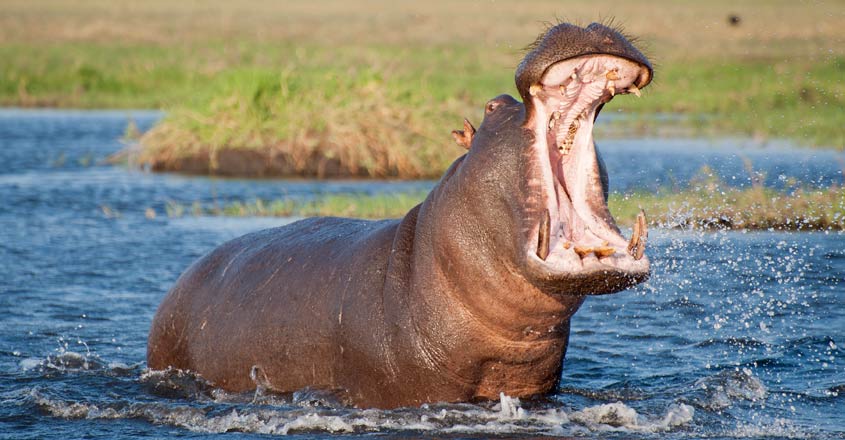
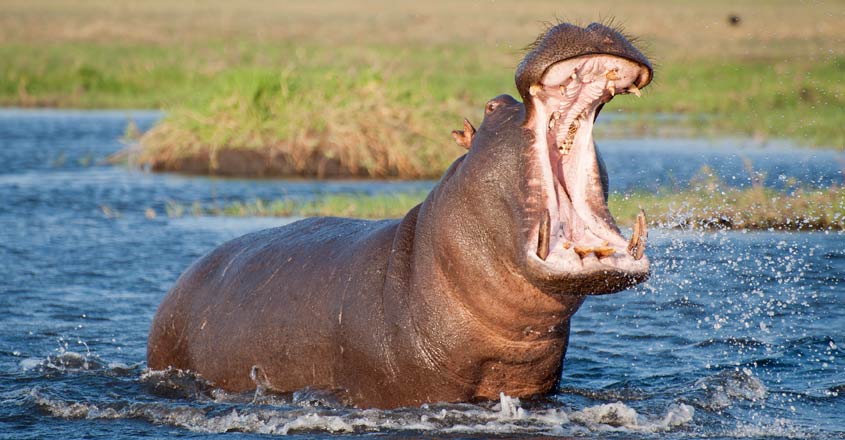
In ancient Greek, the word hippopotamus means river horse, which is undoubtedly an unlikely name for this enormous animal. While we’re on the subject of size, a hippo weighs 4,500 kilograms making it the third largest mammal on earth after whales and elephants respectively.
Hippos cannot swim which is surprising because they spend most of their time submerged in water with only their eyes above the surface. But perhaps you’d like to know why.
Paukwa?
There was a time when only animals roamed the earth. Africa was their main home and they lived amongst each other in peace. There were the animals of the land that ate the dead and others that are the leaves and branches of trees, then there were the animals of the water that ate little fish and reeds.
The land animals were known for their tough skin that would help them whenever the sun was at its peak. Although the heat would get uncomfortable, the sun rays never affected their skin. All but the hippopotamus.
The hippo’s skin lacked the strength to withstand the sun’s rays and as a result, every sunny day the hippo would be the most uncomfortable. For this reason, its skin became thinner with each passing day.
One day the hippo decided he wanted to cool his burning skin in the water and so he staggered to the nearest watering hole and asked the animals of the water if he could stay in the water with them.
“No!” the other animals said in unison.
“If we let you stay in the water with us, you will eat all our food and we won’t have enough,” said one of the water animals.
“I promise if you let me stay in the water to cool my skin, I will never touch your food. I will still eat my leaves from the land.”
The water animals were hesitant but they decided that they would only allow hippo to stay in water when he needed to cool from the sunshine. Hippo agreed to their terms and said that he would always open his big wide mouth so that they could see that he had truly not eaten the water animals’ food.
-
It’s interesting when you think about it. Today if you see a hippo’s wide mouth, it isn’t just showing the other animals that it has kept its word, rather it is warning its observer to stay away from it. With just one snap, a hippo’s canines can kill a human being. This makes it one of Africa’s most dangerous animals.
The hippo is often seen on land at night when it goes out in search of food. As for their inability to swim, these mammals stay by the edge of water bodies, where they can stand but stay in water to prevent their skin from the sun’s rays. They have the ability to close their noses and ears to prevent taking in the water, and can hold their breath for up to seven minutes.
The Tsavo East National Park, Meru National Park and Sibiloi National Park host this magnificent species and are accessible all year.
The story of the Rock Hyrax
#KeWildlife – Story 7
It’s said that over fifty million years ago before evolution took its toll, there were few species roaming the earth. As time went on and seasons changed so did the offspring of the species, and other species were born while others died or became extinct. Evolution of species resulted in the variety we have today.
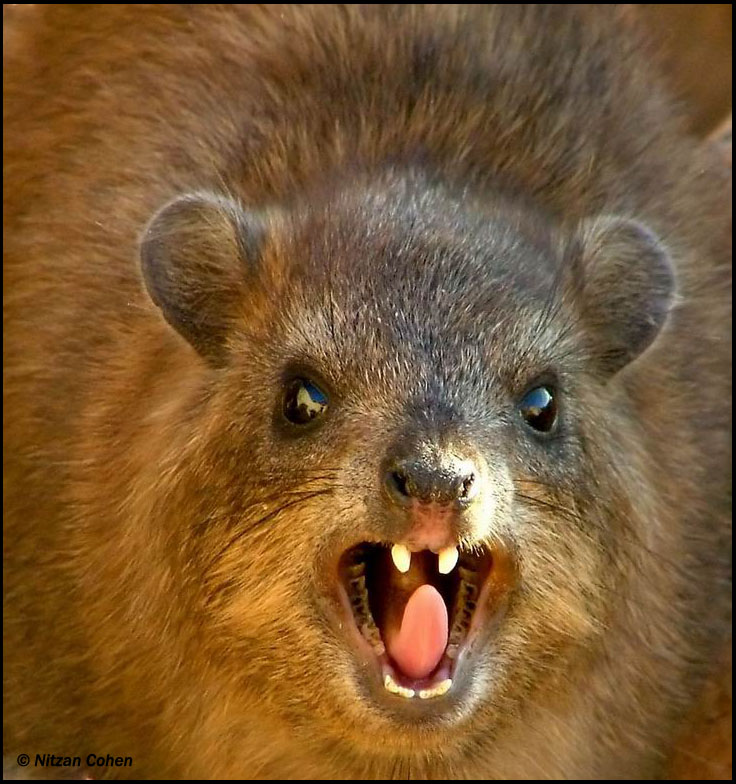
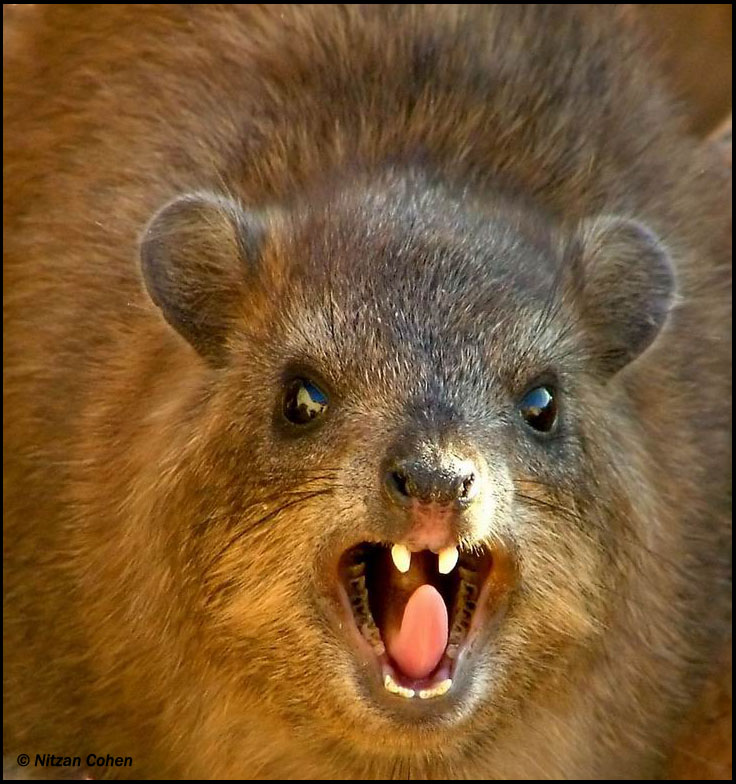
One particular species that is common today is the Procavia capensis or Rock Hyrax or Pimbi in Kiswahili.
The rock hyrax is native to over 25 African countries and is the elephant’s closest living relative. One might wonder how a rabbit look-alike is related to one of the world’s largest mammals. Well, hear it from us, the hyrax and the elephant are relas!
Although the rock hyrax is small in nature, evolution history claims that the birth and death of new species from common ancestors plus the seasonal change is what caused the difference in appearance. Additionally, interactions with varying environments played a big role in affecting the species phenotypes – the outward appearance.
The order in which hyraxes and elephants evolved remains unclear because of the mitochondrial, molecular, and other genetic evidence points in more than one direction.
The rock hyrax is so small, it weighs slightly more than - if not the same as a newborn – between 2 and 5kgs to be exact. It has no tail but its feet have a rubber-like texture that helps them climb steep rock surfaces and trees. Speaking of rocks, that’s where this type of hyrax is mostly found – on the dry rocks of the savanna. Just travel to Taita Taveta county and you will spot a cluster of rock hyrax without even trying. They’re known to be in plenty within both the Tsavo East and Tsavo West National parks.
You may, however, need to carry a pair of binoculars because for a small animal, the hyrax moves at 18kph – but if you do come across a group lounging on a rock, they could be waiting for their cousins, the elephants, so that they can possibly hold a family meeting? We can’t be certain.