

The story of the Zebra
#KeWildlife – Story 6

There was a time when there were many donkeys. And when we say many, we mean that after every kilometre you would come across at least fifteen donkeys. These animals were valued by porters who would use their donkeys to carry goods over long distances every day.
Day in and day out, the donkeys toiled, but their owners – the porters – never appreciated them or let them get enough rest.
On one sunny day as a group of donkeys crossed each other’s paths, they stopped to talk.
“I’m very tired from all the work I do,” one donkey said.
“Me too,” said another. “My master never appreciates me.”
“All I want to do is relax and eat the grass without having to work ever again!” said another donkey.
And all the donkeys present agreed that they too wanted to stop working.
“But how can we get to relax when every time a porter sees a donkey, they make us work?” asked the first donkey.
“Maybe we should visit the wise, old man. He might know how to help us.” responded another.
That afternoon, as most of the donkeys were busy at work, two of the donkeys went up a green hill to visit a wise, old man who lived there. The wise, old man was respected because he cared and was kind to every man and animal. The two donkeys explained to the wise, old man their problem and the man listened and sympathized with the donkeys.
He scratched his head and bit his fingernails as he pondered on solution ideas.
Finally, “I have an idea!” the man exclaimed after a while.
“Can you help us?” asked one donkey.
“Yes I can, I’m going to get some of the paint that I have in my house and make you look less of a donkey. But once I paint you, you will never look like a donkey again.”
The donkeys brayed in excitement for they were tired of being donkeys.
The wise, old man brought out two pots of paint; one was filled with black paint and the other had white paint. He began painting the two donkeys, coating them first with the white paint and thereafter incorporating the black in form of stripes that cut through the white.
When he was done, the donkeys looked beautiful!
“You are no longer donkeys, but what shall you call yourselves?” the wise, old man asked when he was through.
The donkeys thought, and so did the old, man. “I have another idea,” said the wise, old man. “I could call you zebras!”
*
When the new zebras returned to their donkey friends, they looked less like donkeys and more like new animals. No porter asked them to work – and when the other donkeys saw this, they scrambled up the hill to the wise, old man’s house asking him to paint them too.
The wise, old man brought out his pots of paint and one by one he painted the donkeys that came. But as the day progressed, more donkeys lined up and he became tired. He started painting slower than when he began. The more donkeys that came, the impatient they got as they stood in line. When a ruffle began in the queue, one of the donkeys stepped too close to the wise, old man’s pot with white paint and the pot broke. The paint spilled all over.
“I have no more white paint!” exclaimed the wise, old man. “You have to go back as you are.”
So the donkeys that had been transformed to zebras remained as beautiful, while the impatient donkeys remained as they were and continued to labour under their porters’ schedules.
Kenya’s beautiful zebras draw in attention from miles away. You can find them grazing and lounging, enjoying the benefits of their beauty at Hell’s Gate National Park, Meru National Park and Amboseli National Park.

The story of the Rhinoceros
#KeWildlife – Story 5
Allow us to use your mind for a moment.
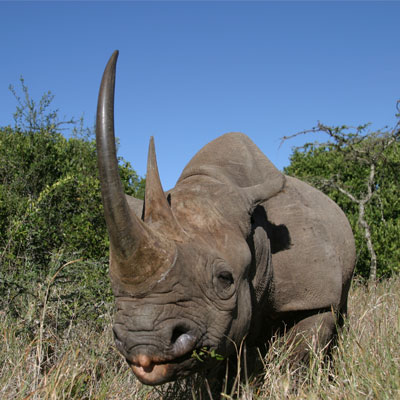
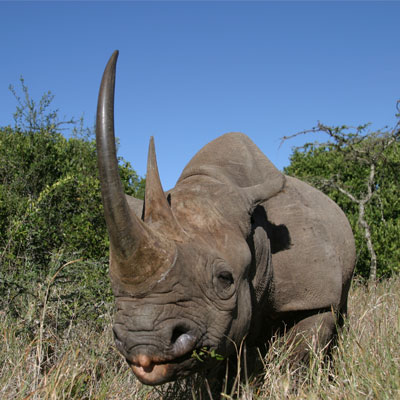
You are on a safari. The sun sets in the horizon and the red and orange colours have permitted the sky to look like an artist’s masterpiece. In the distance, right by a lone Acacia tree is a black-grey large animal standing silently. The wind rustles the leaves above its head and in that moment, there is complete serenity.
Wonderful, wasn’t it?
Standing at 170cm and weighing approximately 1,400 kgs, it’s no wonder the Black Rhino is one of our most outstanding animals. Having coined the term ‘Rhinoceros’ from the Greek word ‘Rhino’ to mean ‘nose’ and ‘ceros’ meaning ‘horns’, this large mammal is probably most unique for its facial features. The black rhino has two horns; one that sit above its mouth and the other between its ears.
But let’s go back to this animal’s weight – black rhinos run on their toes, which essentially goes to show their ability to carry a lot of mass. Even more interesting is the fact that a rhino can charge at 55kph if it senses something that leaves it uncomfortable. That’s a powerful tackle!
There are five types of rhino and the black rhino is the third largest of the bunch. Furthermore, the black rhino is actually a shade of dark grey and not black as its name suggests. One thing we’re certain of is that its exact colour can be spotted better up close but keep the thought that these mammals have excellent hearing but horrible eyesight, so if you aren’t careful, you could be past tense in a matter of seconds.
The black rhino’s lifespan averages between 30 and 50 years. These rhinos aren’t known to be as proactive as scavengers but they do love a good dose of plant nutrients and can eat up to 220 plant species throughout their life. They’re most commonly found eating branches, shoots and sometimes the plant’s fruit.
Kenya’s oldest black rhino, Solio, died at 42 of old age at the Lewa Wildlife Conservancy. She is definitely a rhino to remember because she was one of the few that didn’t fall to poaching. Speaking of poaching, Kenya’s black rhinos are critically endangered! Poachers are often after their horns that are then shipped to other countries where there is the common belief that they can cure certain illness. Needless to say, the hunger to claim these horns has resulted in a major population decline throughout Africa, and it is upon us to rally with the organizations such as Save The Rhino International to save this animal.
Back to the sunset we took your mind to earlier.... need to see that in real life? Black rhinos at Aberdare National Park, Tsavo East National Park and Ol Pejeta Conservancy.
The story of the Nile Crocodile
Story 4
A long time ago on a riverbank by a forest, a monkey and a crocodile formed a great friendship. The monkey would visit the crocodile often and when she came, she would bring plenty of fruit from the forest for the crocodile to eat. In turn, the crocodile would bring the monkey the largest fish he could find from the depths of the river. He would also take his friend on rides along the river where other crocodiles wouldn’t be spotted for most crocodiles loved to eat other animals.
And their friendship continued to grow.
One day Mr. Croc, as he was called, met a female crocodile, and the two instantly fell in love for no male crocodile can live alone. As they talked, Mr. Croc told his lady about his monkey friend and the kind gestures they’d show each other. Little did Mr. Croc know that his lady was a very greedy crocodile who wanted to eat the monkey because she’d heard that monkeys taste delicious.
After supper one evening she devised a plan to get Mr. Croc to bring her his monkey friend.
“My dearest, do you love me?” she asked.
“Of course I do,” he replied. “I have never met anyone as beautiful as you!”
“But you know I could be more beautiful,” she said.
“Yes. And with each day your beauty grows.”
“Thank you, but I could be more beautiful in an instant. You know what can make that happen?”
“Tell me my dear,” responded Mr. Croc.
“The heart of a monkey. Will you get me a monkey’s heart to enhance my beauty?”
“I would but I don’t know where to get one.”
“How about your friend who brings you fruits from the forest?”
“But he’s my friend, I wouldn’t do that.”
Mr. Croc’s lady sulked and cried all night until eventually he agreed to bring her his friend’s heart.
The following morning, he swam to the river bank with a serious face. When the monkey saw him, she was elated but noticed that her friend wasn’t in a good mood.
“What’s wrong Mr. Crocodile?” she asked.
“Nothing. Let’s go for a ride.”
The monkey hopped on Mr. Crocodile’s back and off they went. When she realized that they were swimming further into the river, she asked Mr. Croc why he was taking her so far. He told her the truth and she responded, “Why didn’t you tell me earlier that you wanted my heart? I keep it behind a tree at the edge of the river bank. We can go back and get it if your lady really wants it.”
At that, Mr. Croc was so excited, he took the monkey back to the riverbank. When they arrived, the monkey jumped off and turned to him.
“My heart is not here,” she said, “And I am angry at you for wanting to let your lady kill me. We are no longer friends.”
Mr. Croc swam away, sad that he had lost a friend and was about to disappoint his lady.
*
While the story teaches a lesson or two about boundaries, we could also note that it’s rare to find such a friendship in the reality of the animal kingdom.
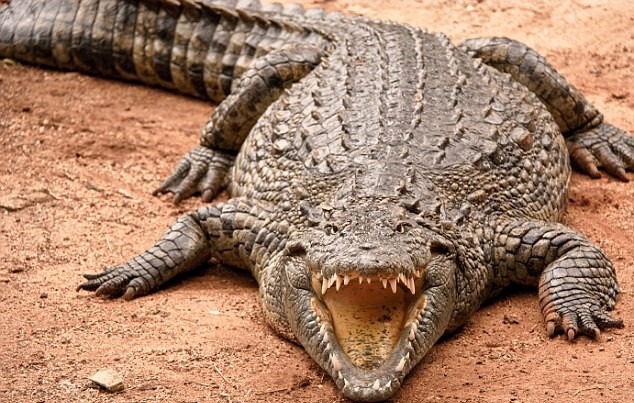
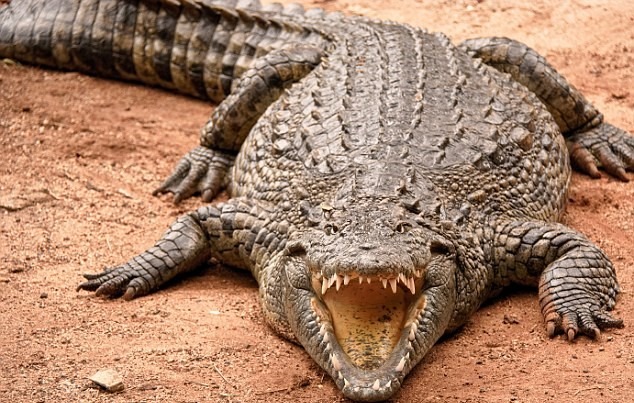
In Kenya we have the Nile Crocodile; one of three African crocodiles. This species is the largest freshwater predator and is among the world’s most deadly predators. This amphibian is also known to eat other crocodiles that are in its path and is further reputed as a man eater.
Want to see Nile crocodiles and examine their scales even closer? We wouldn’t advise you to tread near them, but you can find them at Central Island National Park in Turkana and at the Sibiloi National Park.
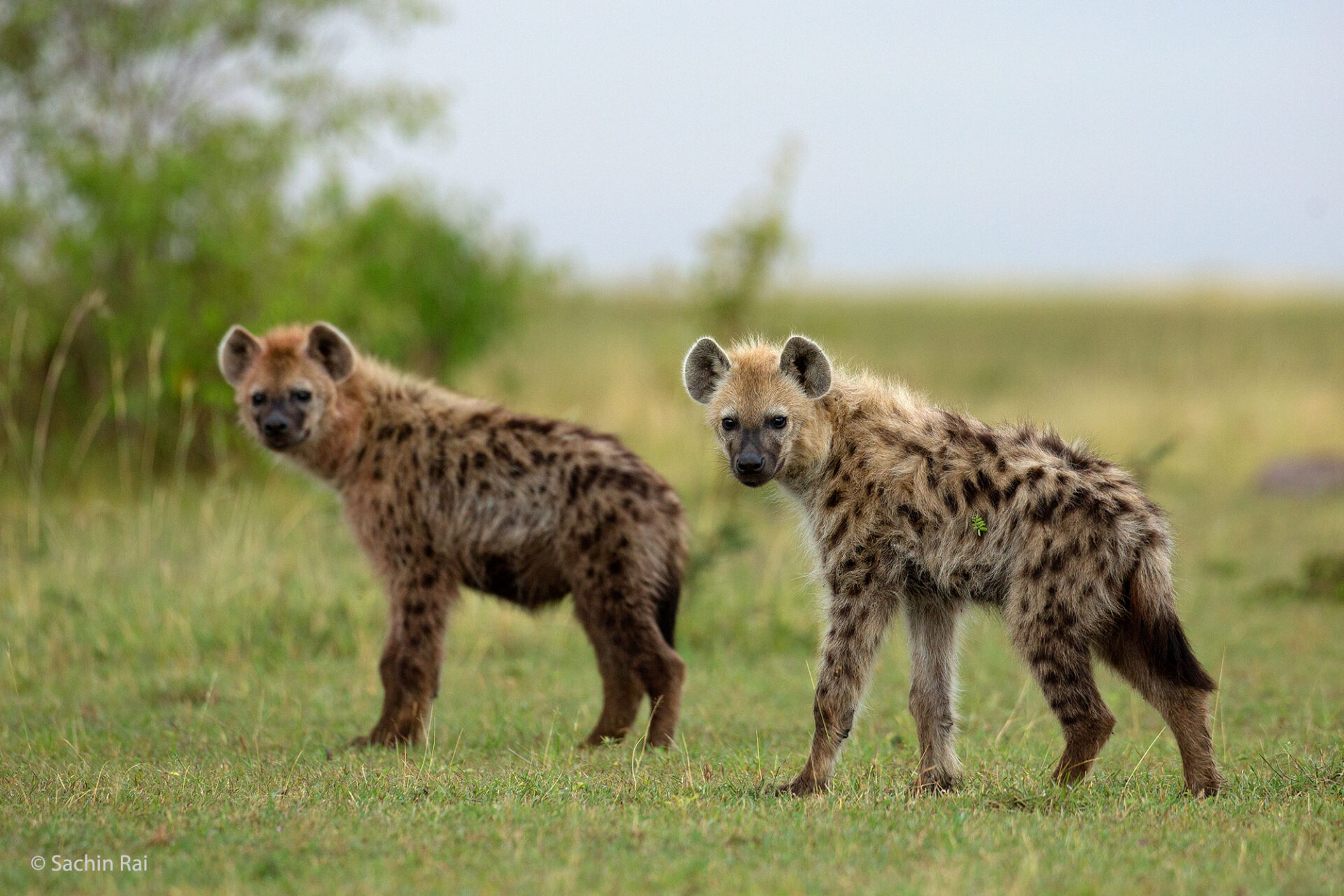
The story of the Spotted Hyena
#KeWildlife – Story 3

Crocuta crocuta. The name has a nice ring to it.
If we’re to look into hyena history, this animal is probably the best example of wildlife marked as gluttonous, selfish, and even foolish. The most famous of this species has to be the famous three that were brought to international screens in 1994.
Shenzi, Banzai and Ed.
Do these names ring a bell? Well perhaps you remember their leader Scar? the brother of Mufasa?
But we digress....
Crocuta crocuta is the other name given to spotted hyenas or laughing hyena or simply fisi for the Swahili speakers. With a figure that’s somewhere between a small bear and a dog, these sandy-grey furred animals are commonly identified through their black spots. They are significantly different from the stripped and brown hyenas. But are similar in that they do bark in form of laughter and can be heard from miles away.
Although spotted hyenas are plenty at night, a fair number can be spotted in the bright of day. A fascinating aspect about these animals is they are one of the most formidable and well-organized predators within the animal kingdom. They hunt in teams to capture larger animals such as wildebeests and gazelles. They are responsible for scouting (and killing) 95% of their meals and when confronted by other predators, they ferociously fight back. This is contrary to stripped and brown hyenas that feign death when found in a similar situation.
The spotted hyena’s pack is led by a female hyena. The females are larger than the males, more aggressive and thus, dominant. The largeness of their hearts allows sufficient oxygen flow and is the result of their ability to endure a hunt for several hours. As for stumbling upon abandoned carcasses, these animals can smell the decaying flesh of an animal from as far as four kilometres away. If the supply is in plenty, a single hyena can eat even 15 kilograms of meat.
Fisis live in clans and mark their territories through droppings or substances secreted from their anal glands but the spotted hyena’s display much communism in that they live in groups atop high lands where they can easily spot other clans that may want to intrude.
There’s a common assumption that the reason humans despise hyena’s so much is because of their recurring habit of trespassing into human homesteads to kill and carry away the domestic animals... but hyena’s got to eat right?
It’s always thrilling seeing the crocuta crocuta roaming around or possibly in action. Locally, these carnivores can be found at the Aberdare National Park, Tsavo West National Park and Nairobi National Park.