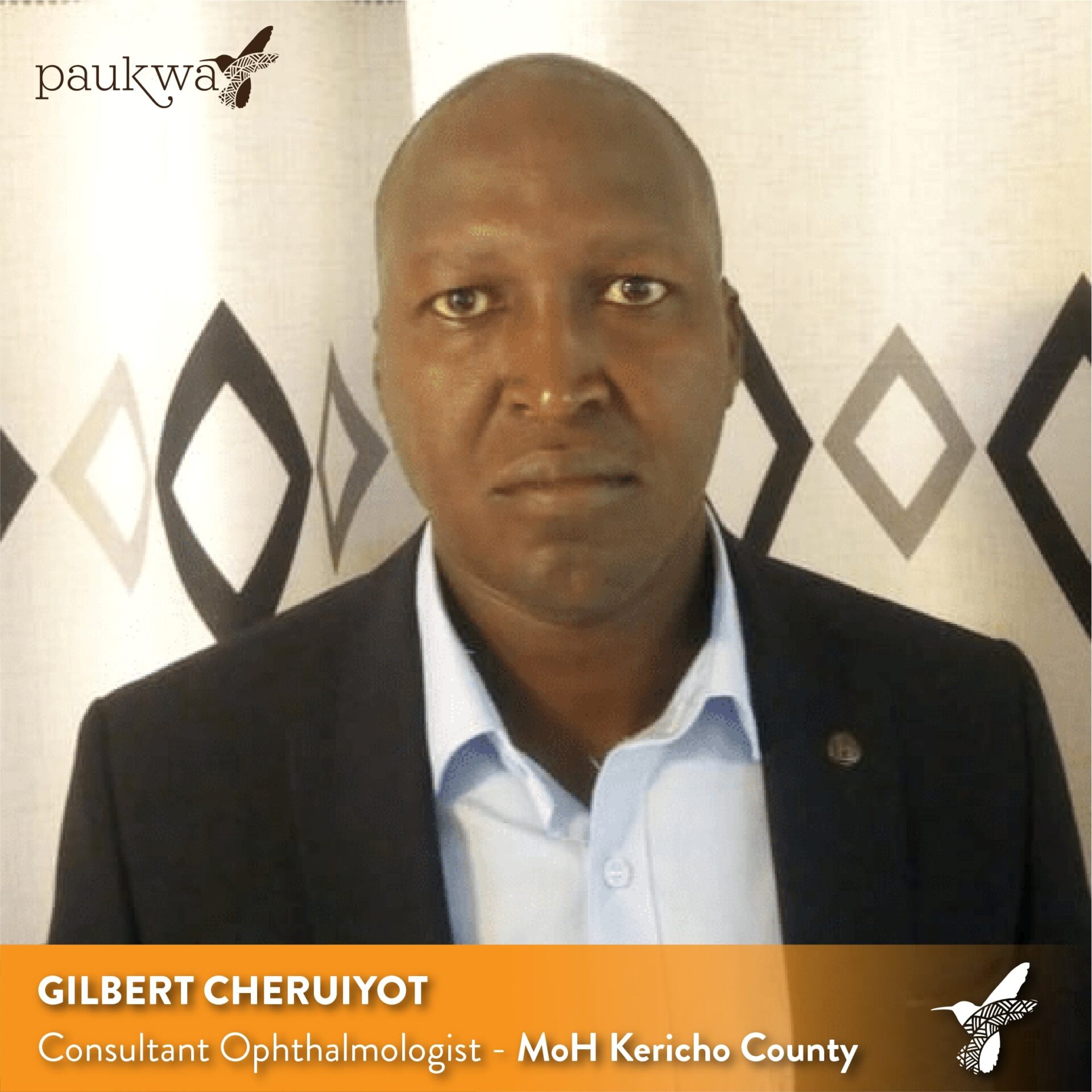
Gilbert Cheruiyot - Achieving the Unimaginable
In August 2001, Gilbert Cheruiyot stood in line at Jomo Kenyatta International Airport waiting to board a flight to Sweden. He’d scored double: it was his first time in Nairobi and he was about to leave the country. As the plane sped on the track and ascended, he still couldn’t believe what was happening.
Before the plane or the airport or Nairobi, Gilbert was a little boy in Machorwa Village in Kericho. His weekday routine included waking up at the crack of dawn and preparing himself for the four kilometer walk to Charera Primary School. He was an average performer at school, and while he was sure of his ability to do well in school, he hardly pushed himself further beyond his comfort zone. In 1991 he was a KCPE candidate and the following year he was smartly dressed in his Kaplong Boys’ High School uniform, ready for boarding school. But by this time, he’d had an attitude shift, and he was determined to work hard.
In form two one of his friends fell ill. Gilbert found time between classes to visit him in the Kaplong Mission Hospital ward. He would look on as the smartly dressed doctors with stethoscopes went about their routines checking in on patients and prescribing the required medication. He listened to how they interacted with patients, and sometimes the conversations that were full of medical jargon but it further piqued Gilbert’s interest. Soon enough, his aspiration was to be one of them. His new passion pushed him to work smarter in class. He knew that in order to become one of the smartly dressed physicians he needed to pass his exams. In 1995, he sat his KCSE exams and was relieved when he found out he’d scored an A-.
 As is usual for form four leavers, after high school came the long days at home anxiously waiting to receive an admission letter. He kept himself busy by being proactive; he’d pick tea on the plantations that carpet Kericho and sometimes walk to Londiani, a nearby town – to herd his sister’s cows. In 1997, a letter that bore the Moi University School of Medicine stamp arrived addressed to Gilbert and at that moment, nothing else mattered; he was going to study medicine.
At Moi, he met students from different parts of the country. A few of his classmates were from rural settings like him. In comparison to those from larger towns, they were less in number. He became aware of his broken English and tried his best to make himself invisible among his peers. He turned to books in the school library and steadily pursued the end result – because he knew from past experience that hard work yielded positive results. Before he joined campus, Moi University in partnership with Linköping University in Sweden and Indiana University in the USA had rolled out an exchange program aimed at rewarding twelve of the best-performing students. His hard work evident to even the institution’s administration made Gilbert fall within this category. The next chapter was him seated in a vehicle in 2001 on his way to Nairobi aka the big city and after that on a plane, watching the tall buildings become little spots eventually hidden by the clouds.
Gilbert returned from Linköping University with a newfound self-belief. He completed his undergraduate training in 2004 and was then posted to Nakuru Annex Hospital for his twelve-month internship. After this intense year, he was assigned to Loitoktok District Hospital where he affirmed to impact lives. When the time came to move on, he was posted to Kabarnet District Hospital for a brief time, and finally, he was one of the new doctors at AIC Litein Mission Hospital in 2007.
While working as a general physician at Litein, he noticed that every month, a team of doctors from Nairobi would come in to perform cataract surgeries. Dr. Cheruiyot was fascinated by these procedures and wanted to learn more about how to carry them out. After two years of watching from the sidelines, he voiced his interest in becoming an eye surgeon to the team’s lead ophthalmologist. His interest was well received and he was urged to talk to the hospital administration about his plans. The lead ophthalmologist helped Gilbert apply for a scholarship with Bavarian Lion, a non-governmental organization. After the nervous wait came positive feedback, and with the blessing of his employers, Dr. Cheruiyot enrolled in the University of Nairobi for a Master’s degree in Ophthalmology.
He completed his Master’s in 2013 and returned to work at Litein. His time here came to an end in 2017. That year he was relocated to Kapkatet Sub County Hospital to head the hospital’s newly opened eye unit. Thus began his work conducting cataract surgeries and corneal repairs.
“Nothing gives me greater pleasure than restoring sight to the patients who visit the eye unit,” Dr. Cheruiyot says. He has come a long way from his humble beginning, and we applaud his interest and dedication to finding his better self. For this, we celebrate him as one of our Kenyan health workers.
#KeHealthWorkers

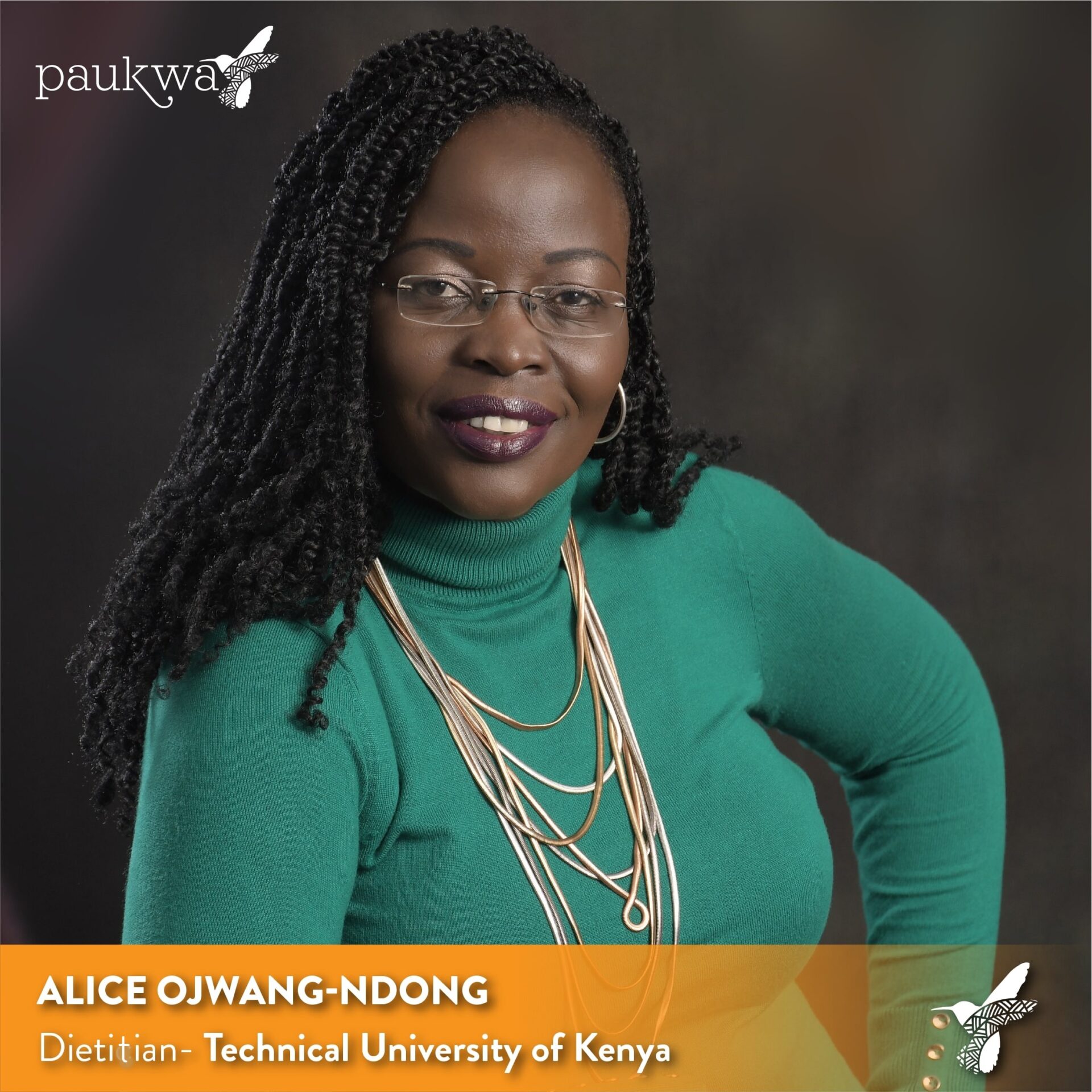
Alice Ojwang-Ndong - The Educator Dietician
Alice Ojwang was brought up around health workers. On days when her relatives gathered in her parents' home in Nairobi, conversations revolved around health matters. Alice would listen in on these discussions with the interest of an inquisitive child. When she joined Lwak Girls’ Primary Boarding School in lower primary, she cheered herself up by thinking of these times on days when the homesickness was too much to bear. But with not much choice, she opted to persevere. Soon enough, she adjusted to life in Siaya County and proceeded on to the school’s high school. As KCSE neared and with it information on tertiary studies and the careers possible, she had come to the decision that she would follow in her family’s footsteps and work towards becoming a health worker.
 Exam results were scheduled to come out in 1993 and as expected they did. Alice sat hopeful, waiting for the ticket to med school. She was shattered when she found out her were below the cut off mark to study medicine. She turned to her family and they urged her toward nutrition. She joined Kenyatta University the next year to study Home Economics. The course was unlike what she imagined, but she was exposed to the curative aspects of nutrition, and even did her industrial attachment at Kenyatta National Hospital. She enjoyed working with patients and the results from those she worked with made her work all the more satisfying.
In 1998, Alice graduated and began the job search. Unfortunately, there were no vacancies for nutritionists at any facility she walked into. When the job hunt wore her out, she considered volunteering; after all, what was important was building her work experience. She started out at Childlife Trust. Meanwhile, her proactive spirit never dimmed. She particularly sought a job at Kenyatta Hospital, and after twelve months of rejection, she was finally employed as a nutrition officer.
Some of Alice’s most frequent patients were malnourished. She was required to prescribe diets that would improve their health – and the results could only be measured as weeks progressed. When eventually they did, she was ecstatic and motivated to do more for their well-being. After working at KNH for two years, she was ready to help patients on the other end of the spectrum, and so she joined Roche Pharmaceuticals as an obesity trainer. The company had just launched a new drug that helped those struggling with obesity to curb their unhealthy cravings and promote weight loss. But the medication would not be effective on its own. They required a specialist who could design health programs for people suffering from obesity. In addition to employing Alice as an obesity trainer, Roche Pharm set her up with a private practice which she could use to see and educate patients. The practice was called Xenihealth Nutrition and Weight Loss Management Clinic, and operations began in 2001.
The following year, Alice strengthened her skill by going back to school. She joined Stellenbosch University in South Africa for a Master’s degree in Nutrition. Her clinic was still under the Roche Pharmaceuticals’ umbrella and she was confident that despite her absence, the work would continue as usual. She returned home in 2005 and was back to work but with an added hobby. Her time in SA allowed her to travel and this was what she wanted to do. Over the ten years that followed, Alice travelled to different parts of the world where she learnt more about nutrition and dietetics. She would bring the wisdom back with her, teaching her fellow nutritionists everything she’d absorbed. She found that she enjoyed teaching people and helping others sharpen their skills with all the knowledge she had acquired. Alice, therefore, decided to become a part-time lecturer at the Technical University of Kenya in 2013.
By 2015, teaching had become such an integral part of Alice’s life that she decided to make it her full-time job. But first, she needed to tie up the loose ends in her existing career. She shut down Xenihealth and joined North West University in South Africa to earn her doctorate in dietetics. After graduating in 2019, she returned to the Technical University of Kenya, where she currently teaches students enrolled in the Department of Human Nutrition and Dietetics. Her goal is to prepare the next crop of dieticians to take the mantle.
Asante sana Alice for your efforts to improve health from the inside out. We commend your Paukwa spirit!
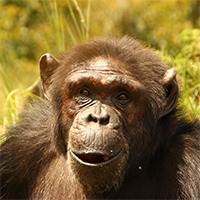
The story of the Chimpanzee
#KeWildlife - Story 20
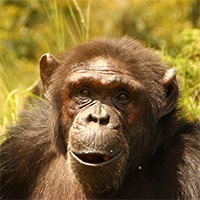
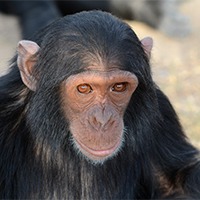
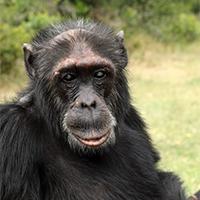
In this #KeWildlife piece, we’d like you to meet five of the several Chimpanzees that have called The Sweetwaters Chimpanzee Sanctuary home. This sanctuary was established through a combined effort between Ol Pejeta Conservancy, Kenya Wildlife Service and the Jane Goodall Institute, aimed at providing lifelong refuge to orphaned and abused chimpanzees from west and central Africa. The sanctuary has even adopted chimpanzees from Asia, and has seen the birth of the second generation of Kenyan Chimpanzees. That aside, here are some of the ‘guys’ at this haven:
If there’s any way to describe one of the oldest Chimpanzees to have arrived in Kenya, it’s strong. His name is Poco, and he was born in 1980 in Burundi – but into a tragic life. Poco was caged above a workshop and used as entertainment for guests. He was rescued in 1995 and brought to Kenya where he got to experience freedom and love, and in return, his gentleness grew. He still entertains, but at his own pleasure – never shying away from strutting before visitors who come to learn about the mammals at Ol Pejeta.
In 1983, a person was caught in Mombasa, and in his possessions were a few chimpanzees. The person, who seemed to have the intention of ferrying these mammals, claimed that he had found the chimpanzees abandoned in DRC. He was reported to the KWS team who promptly rescued the chimpanzees. Among them was a female who, by the look of a withered limb, had suffered from polio at a younger age. She along with the others were confiscated and renamed. This particular chimpanzee was given the name Judy. She was taken to the animal orphanage in Nairobi and in 1993, was relocated to Ol Pejeta.
Oscar has been termed ‘the bad boy’ of the group of chimpanzees at the sanctuary, and we can understand why. His mother is the fierce Judy and his father was the alpha male of the group before Oscar ousted him. He was born in 1997 and is known for his favorite activity that is grooming. He has several blotches of light skin on his face which makes him stand out from the rest.
Saidia is a survivor! She was brought to Kenya from South Sudan in 2003, at barely a month old, having suffered severe burns. Fortunately, death wasn’t an option for this beautiful chimpanzee. Her hair was shaved off and the wounds were successfully treated. Saidia is now all grown up and as of 31/3/2018 was a mother to one.
Then there’s the woman’s man – Manno. He was born in 2012 in Iraq and was kept at a zoo as a photo prop and fed an alien diet that gave him constant diarrhoea. He was transferred to Ol Pejeta in November 2016 where he was quarantined for a time before being opened to the rest. He is known as the darling of the group and is particularly popular among the ladies.

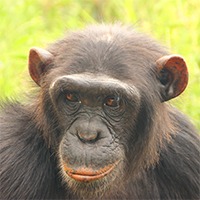
We share 98% of our DNA with chimpanzees. Dame Jane Morris Goodall – English primatologist and anthropologist – first saw chimpanzees in Tanzania at 26. She discovered that these mammals could create tools, and strip twigs and use them to get termites out of a mound. It is said that since then, chimps have been seen using leaves as napkins and towels. This certainly gives an adventurer a location to add to their bucket list.
The story of the Ostrich
#KeWildlife – Story 19

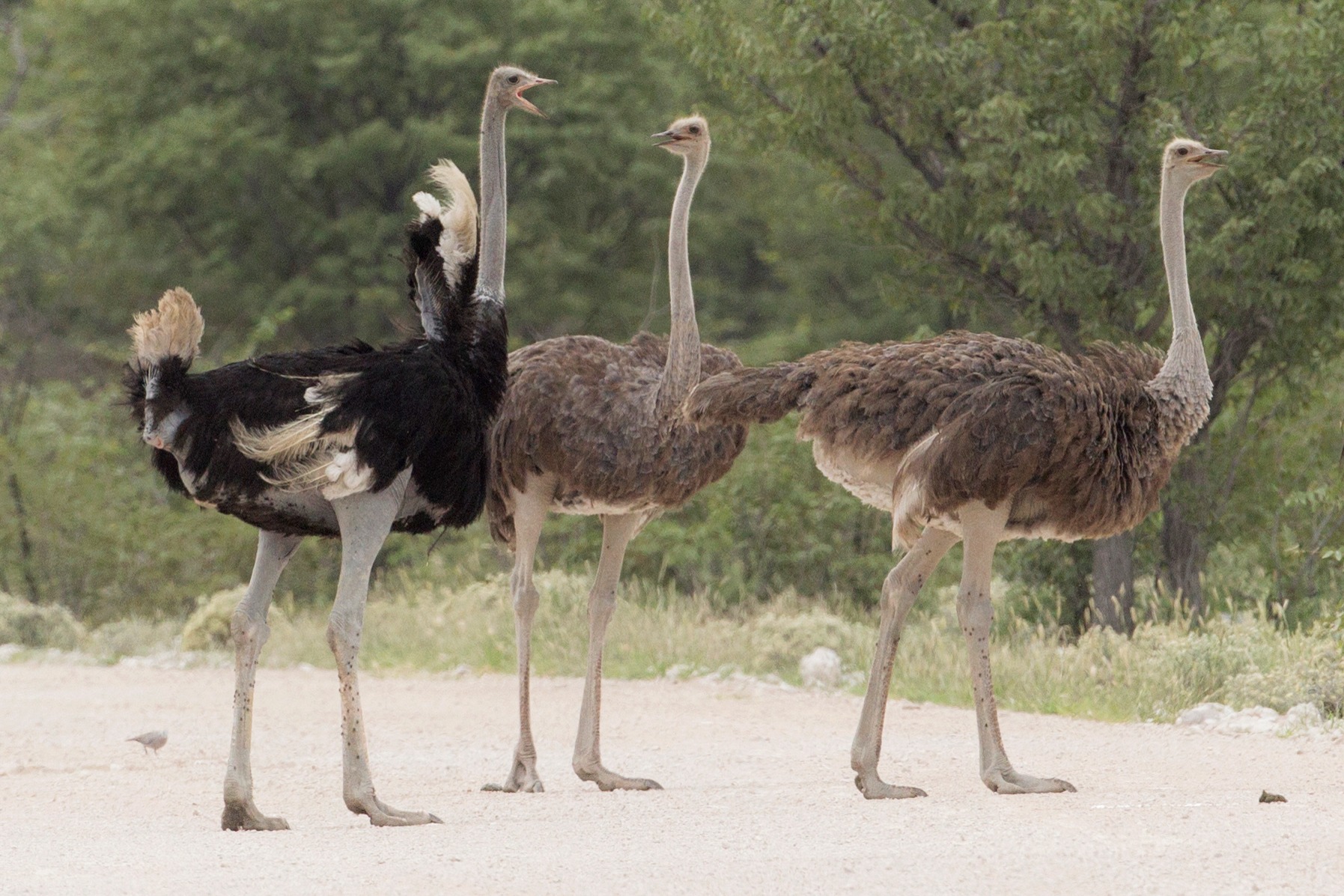
Did you know that there’s a significant difference between a male and female ostrich? The male ostrich is taller and boasts black feathers with an outer strip of white and is referred to as a rooster, while the female ostrich has a dull brown coat and is referred to as a hen.
Gender names aside, these birds are synonymous with the definition of large: their big bodies, large eyes and even large eggs. Perhaps the most awe-striking feature would be their appearance. They have crowned themselves as the land animal species with the largest eyes; each eye is at least 5cm.
An ostrich diet shows the diversity in what birds eat. They are known to devour rodents as well as locusts and lizards, but they are also known for their love of plants and roots. At the very least they can be described as omnivores.
The most interesting aspect of these birds is their mating habits. Usually a male ostrich will bow and flap its wings outward to display its plumage. This is done to get the female’s attention. When the rooster is ready to mate, its beak and sheens will turn bright red, and sometimes, his neck will change into the same shade of red. Hens on the other hand are able to change their feather colour to a shade of silver. When the eggs are laid, they are placed in a communal nest that can hold up to 60 eggs at one time. Both male and female ostriches can sit on the eggs until they hatch, they take responsibility in taking care of the eggs. The hatching period takes, on average, 40 days. By six months, the chick is almost at its full grown height, and at 4 years it will have reached maturity. Ostrich chicks are larger than any other birds; at birth, they can be as big as full grown chicken
Of note is that an ostrich can live a long life from between 50 and 75 years, and in this time they can maintain their running speed of about 70kph.
Domesticated ostriches can be found in plenty at The Maasai Ostrich Farm in Kitengela that was founded in 1991. Here visitors have the opportunity to observe and, for the daring ones, ride these large bird species.
The story of the Puff Adder
#KeWildlife - Story 18
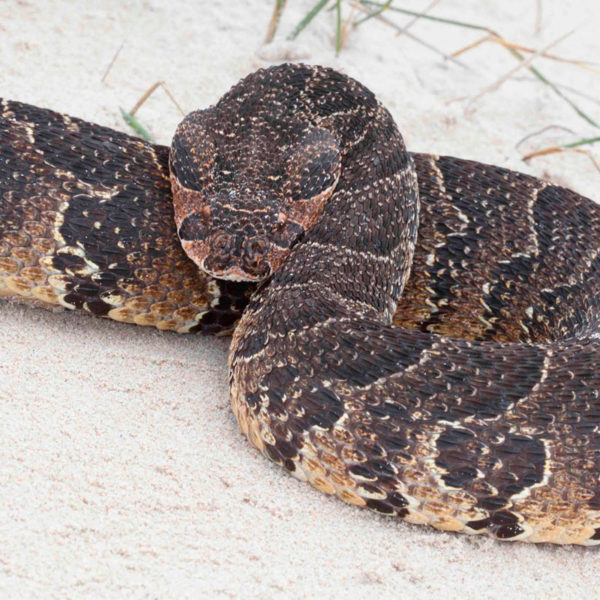
It feels good to be the most feared reptile in the world, especially because I don’t have to hunt as actively as some of the other animals I see in the plains. I take pride in my appearance: scaly body and my ability to slither to wherever I please, my ability to sense an animal, whether near or far – depending on what I choose to focus on, and my fangs – yes! These sharp teeth that take effect on my enemies and my meals – I most certainly appreciate them.
But perhaps you’d like to know how I get to eat despite my renowned laziness.
It’s pretty simple, I wait for my food to come to me.
I take up my ambush position near a scent trail, ensuring that my hideout is secure enough for my body to camouflage. The advantage I have is that my eyes are very good at detecting movement, and rather than hearing sounds, I pick up vibrations using the skin around my jawbone. In order to get accurate vibrations, I have to place my head on the ground – (in doing so, vibrations are amplified enormously). I then target my prey using my sense of taste and smell. When it finally lures itself towards my radius, heat sensitive cells within my lips become stimulated by my prey’s body heat. At this point, I need to have uttermost self-control, because I need to remember that my patience is what helps me get my food.
My system almost works like a computer. When all these senses are put together and my brain processes them, I move swiftly and bite the animal on site. My fangs pierce the animal and release venom. Thereafter, I release. I use my venom as a hunting aid: to mobilize or slow down the prey, rather than to kill. At this point, I’m content for my prey to escape.
You might think I’m crazy to let the animal get away, but trust me when I tell you when my venom gets into the prey’s system, it won’t go far. All I have to do is wait for the venom to take effect. Unbeknownst to my prey, it has left a trail behind that only I can detect. I capture this trail with my fork tongue. After a time, I follow the trail to my meal and enjoy the feast of the dead animal.
-
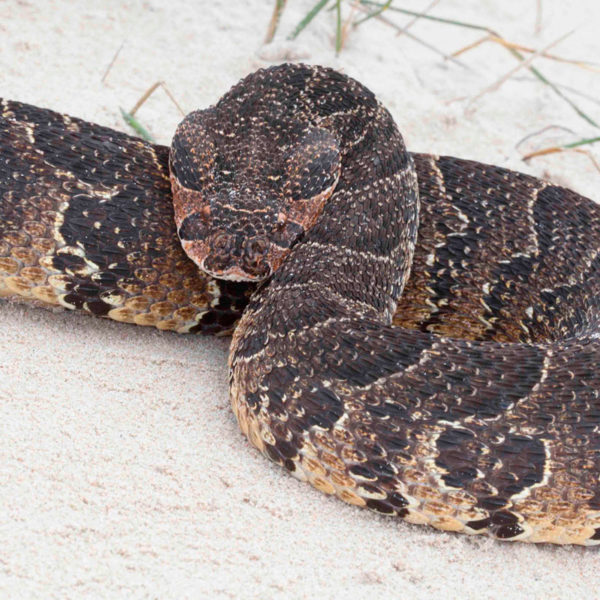
The Puff Adder is the most widespread venomous viper snake species found in African savannah grasslands. The snake’s colour pattern varies geographically, varying from yellow, light brown and orange, overlaid with a pattern of a darker brown to black chevron shaped bands.
These deadly animals are known to inject their prey with venom. A puff adder bite causes immediate severe pain, and it is responsible for the majority of snakebite fatalities in Africa. We strongly advise that you stay away from this animal – as interesting as it may seem.
The Story of the Cheetah
#KeWildlife
The season was unbearably hot. Each day my two brothers and I would move across the plains searching for any hint of shade to protect us from the unrelenting heat. We were now grown which meant we were on our own, no longer part of our mother's pack. Life had been fun at first after leaving the pack, finding new territory, chasing down diks diks and then larger antelopes. Life was easy, when we weren't hunting or recovering from the fullness of the hunt we would take the time to explore. Ravines, waterways, mud holes, enjoying the view from the branches of an acacia. Simple days.
Perhaps life had been too easy, as we found ourselves moving further and further away from the grasslands we grew up in. From the banks of the Ewaso Nyiro in Samburu, we moved west into Shaba. Maybe we should have taken into account the stark changes in the terrain as it became drier, rockier and more desolate as we moved towards the land of the sun rise. But young turks live for adventure and a chance to prove oneself.
Weeks later we were too far east to consider going back. We knew what lay behind - stones, empty river beds and no food. Forward was the only option.
It had been three days without sighting a single gazelle. We were confused but perhaps the strange noises and smells we began to witness held a clue. Smoke and harsh sounds were intermingled with the smell of goats. Was there hope for our bellies if we could overcome our fear of the predator called man?
On the fifth day my brothers decided to try to secure a goat, they had prowled around scouting for two nights and knew they were held in the same place each night. I pleaded with them to reconsider but they scoffed at me taunting me with the word coward. That night they set out and within and hour they were back .. each of them dragging a young kid by the throat. Hungrily we fell upon them, ravenously tearing each animal from limb to limb.
Three nights later out they went out again and returned once again with a bounty. It felt so good to be full again.
A few days later and it was time to eat once more. This time they said, I would need to take part. We left in the middle of the night, the tantalizing smell of goat leading us to the enclosure. It was nearly dawn by the time my brothers and I got there. It seemed that the fence had been strengthened and I watched them search frantically for an opening, scratching the bamboo with claws to bring the weak rootless trees down.
Finally one, then two stems broke and were pushed them in, my brother paid no mind to the sounds of the tree bark shattering. He crept through, each of his bony shoulders squeezing by the shards in the fence. The goats became hysterical in their bleating - clearly they could smell us, and our intent. Just as I got past the fence we heard a great commotion.
Man was awake!
We scrambled back to the fence, I could sense my brothers agitation as I tried to squeeze through. Finally I was through, but had to make sure they made it out as well, they couldn't be left to the fate of man. Finally one then two were out and we were off, the wind beneath us as we loped off into the bush.
We knew no one could beat us, on the terrain at our top speed, we were in our element. This is where my brothers and I were kings.
As we ran we heard the noise of the men behind us, together with the guttural sound of the ship on wheels. In no time they were upon us, and we were losing our top speed. We veered hard into the wilds but the dryness of the plains afforded us no cover. We were completely exposed against the dark rocks and red sandy soils.
The heat began to wear me down. I could feel myself losing ground and could hear the men who were gaining it behind me.
My muscles, which had wasted away in the preceding weeks were letting me down. I could hear my heart pumping each time I stretched out my legs in a bid to swallow more ground.
I stumbled and lost my footing and my gait was thrown off balance. I tried to recover but it wasn't with the speed I was used to. If my mind could make me run faster it would, but alas...
Suddenly I felt something hit my legs with a burning sensation. There was no time to figure out what it was. I had to keep going but by now I was a shadow of myself, running as slowly as a warthog.
Again, a lashing feeling around my feet making me trip and roll over into the dusty rocky ground. I could hear them all around me now... men shouting their unintelligible sounds, mocking me as I staggered to my feet trying to find a way out go the circle.
I felt a rock hit me and I yelped, but I didn't see mercy around me, only anger in the eyes of my captors. I tried to look out for my brothers but I couldn't see them anywhere. I snarled at the men as they grew closer hitting me with stones.
In my mind I thought of my weekly prey and wondered if this was the bewilderment they experienced in the final moments before my teeth sank into their throats.
They circled closer signaling to each other with sounds and gestures that I didn't understand.
Finally I saw a rope thrown across me and my legs collapsed as the noose tightened. Confused I felt my legs belted together. I was captured in the most humiliating of ways, with no knowledge of what would happen next.
I closed my eyes, wearily into surrender.
******
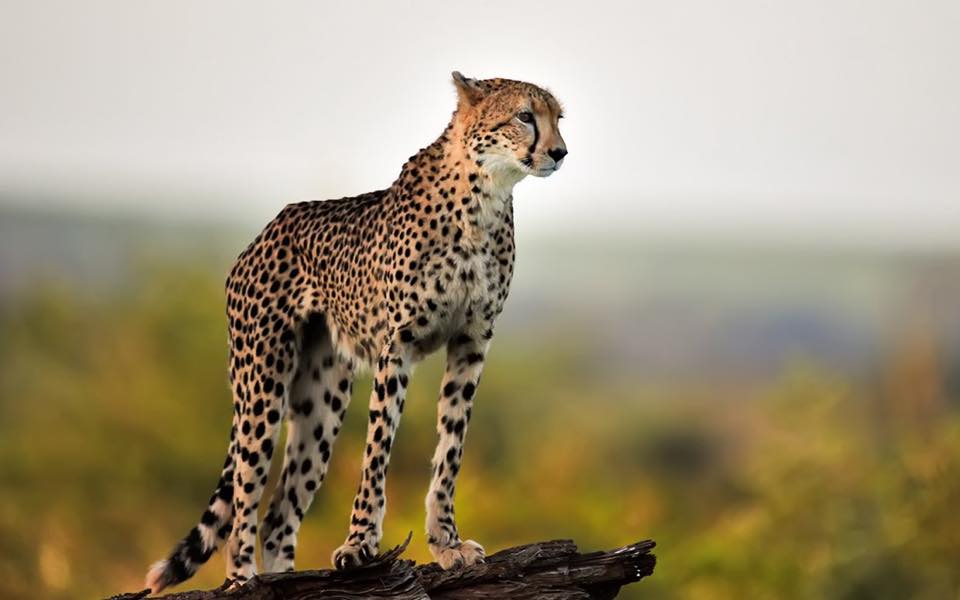
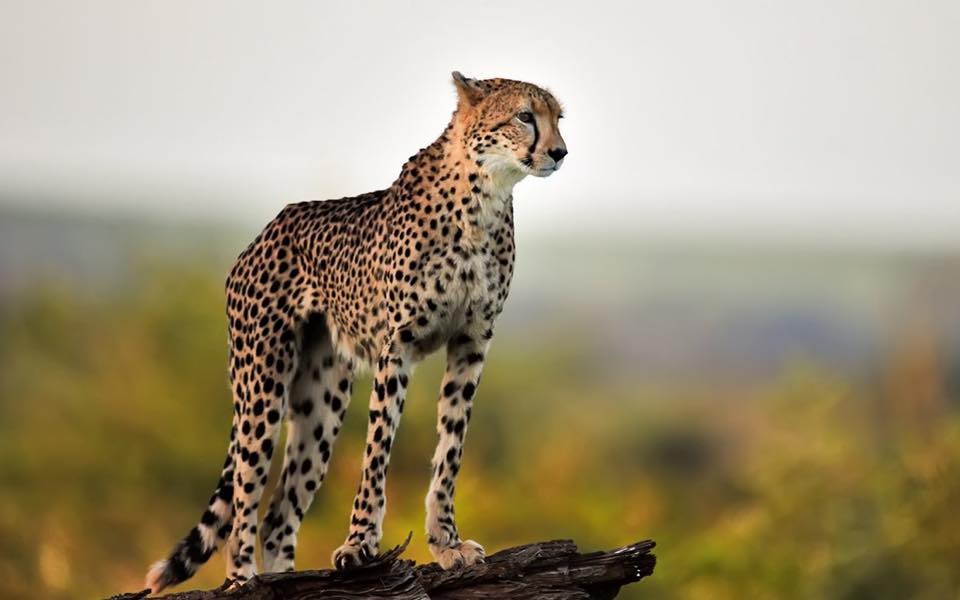
Cheetahs are the world's fastest runners. With a top speed of 112 kph the cheetah can outrun most of its prey. However it can only maintain this top speed for about a minute meaning it's hunting style is tactical and swift.
Cheetahs are classified as an endangered. Less than 1300 can be found in Kenya, which is one of its primary habitats. Known for its loping walk and sharp shoulders, the cheetahs' coat is tawny with black spotted markings and a plain white underbelly. Many folklore tales tell of the origin of the cheetahs tears, marked on their faces from eye to mouth. Adult cheetahs weight between 24-34kg and they live in packs until the cubs are weaned.
Cheetahs can be found in the Maasai Mara, Tsavo, Samburu and Meru national parks. The current drought has caused cheetahs to venture into human settlements for their prey as was experienced in March 2019 in Wajir county where two cheetahs were chased down by six men and handed over to the Kenya Wildlife Service.
The story of the Flamingo
#KeWildlife – Story 16
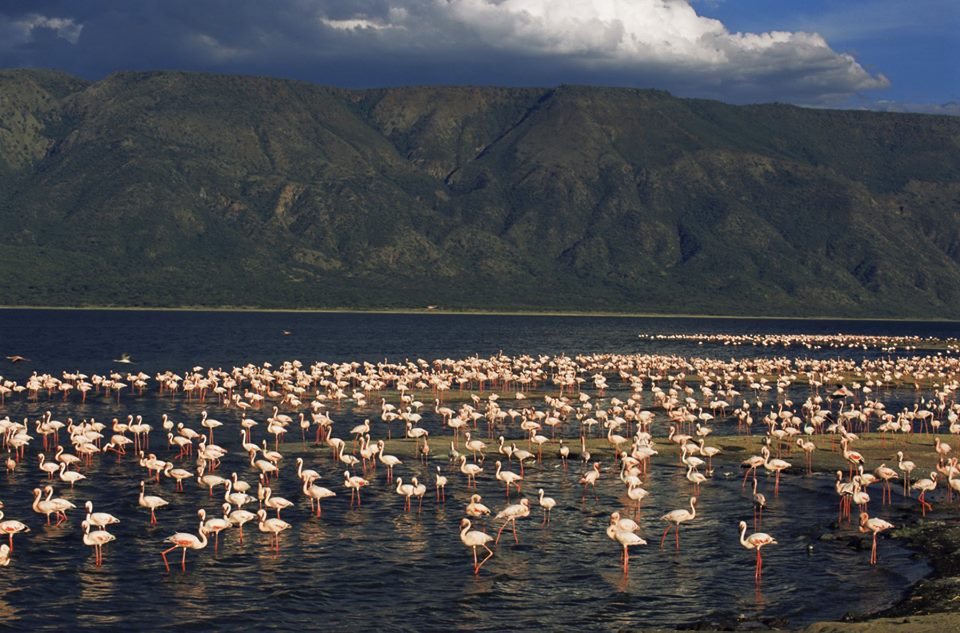
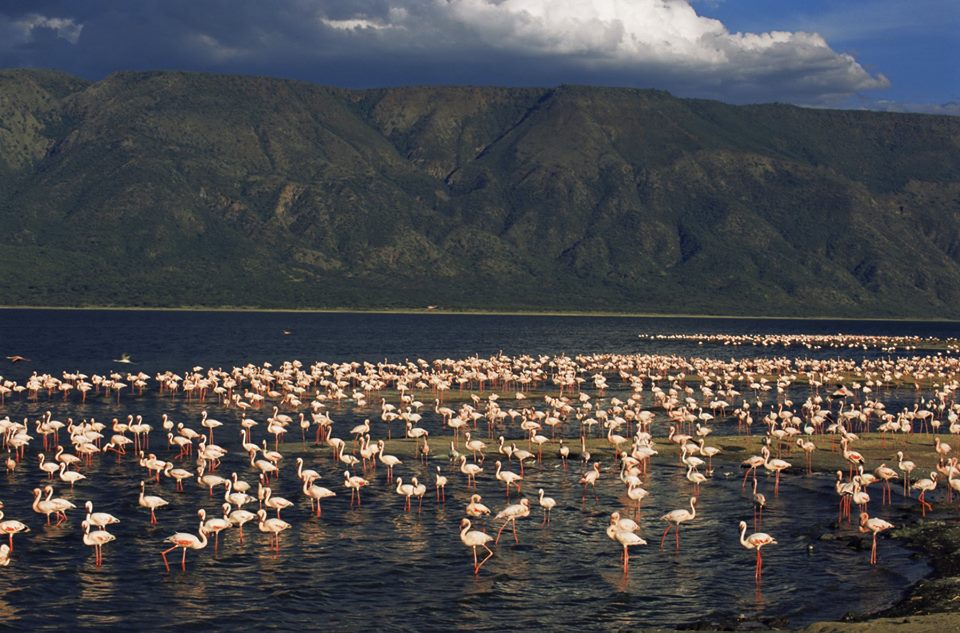
There are certain places that are known for something special, and Lake Nakuru is one of them. Its hard to think of the lake without the iconic pink birds that are synonymous with it. Flamingoes or more specifically the Lesser Flamingo whose claim to fame is that they are the most numerous type of flamingoes in the world are beautiful birds that are spread across the Rift Valley and can be found as far away as India. But our region holds a certain magicfor this long legged creature - Lake Natron and Lake Magadi are the primary breeding grounds for these important birds and without the lakes….no flamingoes.
But back to Lake Nakuru. Did you know a couple of years ago the lake started expanding? Somehow this expansion from underground sources upset the delicate balance of the water ecosystem resulting in less algae available for the daily consumption of the thouands of birds living there. And so a massive migration of the lake’s iconic birds to Lake Bogoria, a little further north in the great Rift Valley took place. So now if you want to witness the glory of a million flamingoes gliding over the lake or creating a massive pink cluster covering blue water the hot waters of Lake Bogoria is the place to do so!
One last thing before we go – did you ever wonder where the flamingo gets its beautiful pink hues from? Interestingly, when it hatches it’s a bluish grey in colour. However from the time it starts feeding on life-giving algae a transformation begins. Eating algae which are full of carotenoids, infuse our flamingo friends with their distinct colour as they grow. Who would have thought excess consumption of algae would be colourful for your health?!
The story of the Buffalo
#KeWildlife – Story 15

The large vehicle was parked by an Acacia tree in the middle of the grasslands. The driver paid no mind to the trail he had left behind. He had bigger things on his mind. Dressed in khaki shorts and a green shirt, he stepped out of his Land Cruiser, adjusted his safari hat and examined the land.
A few zebras grazed in-between a herd of wildebeest in the distance. Giraffes stood tall further away against the few trees lining the horizon, and the water of a little dam glistened against the midday sun. The man adjusted the laces of his safari boots and strapped his firearm against his chest, then began his long walk to the thicket two kilometers away.
He arrived in less than half an hour, despite the sun’s efforts to wear him out. Tenacity was his motto, and to return to his homeland with an elephant’s tusk? He’d be the richest man in his country, if not the continent.
“Magical Kenya they say,” the man said to himself as he spotted the large elephant approximately 500m from him. He chuckled at his own words and stared at the large beast in both awe and greedy desire.
Then, he unfastened his firearm, set the bullets and then lifted the gun to his shoulder.
The beast stood still, unaware of the nearness of its death while the man tried to decide where to shoot at first - the elephant’s legs or abdomen. He settled on the abdomen – four shots and the beast would collapse.
He counts.
"Ready, set…."
Suddenly the ground shakes. The man is caught unaware, and his firearm drops from his loose grip. Something runs in the bush around him. He hurriedly picks up his firearm ready to put an end to whatever beast has interrupted his hunt. He waits, as silence ensues.
Just then, out of the thicket, a massive animal comes running, its head bopping up and down. Horns? The man can barely make them out. He feels a sharpness against his ribs, then another. The man falls to the ground – firearm still in hand.
-
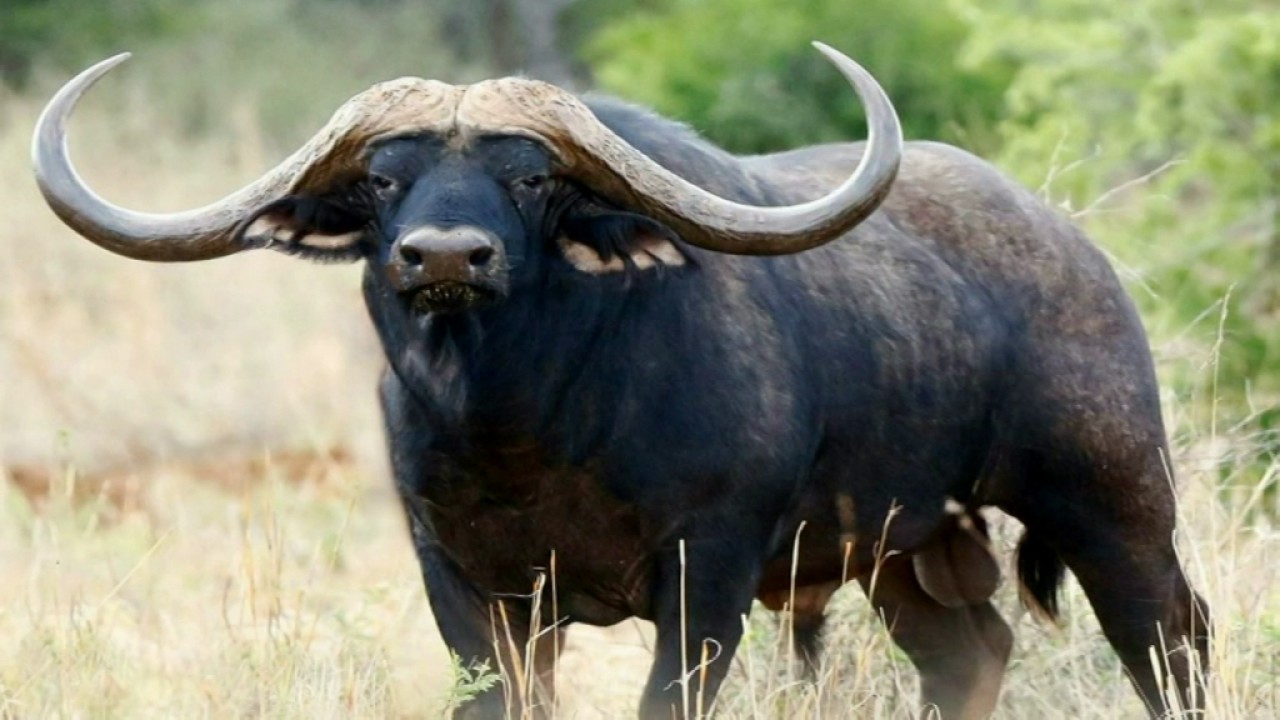
You see the thing with the African Buffalo is it senses danger from a mile away. It seems like an unlikely attacker if you judge it at first glance, but its defence against enemies and intruders is mounted squarely at the top of its head; horns longer than a man’s arm. If provoked, it lowers its head and pierces its opponent. Much like the elephant, the buffalo isn’t a predator but an animal that gets overly aggressive when enraged – and when it attacks, the opponent’s only hope is speed.
Woe unto you if you come across the lone buffalo. Considered one of the most dangerous animals in the wild, even its own kind steer clear of him.
The hunter in the story above lies on the ground sprinkled with dust. The buffalo has done what it needs to do to protect his territory.
It’s no wonder this ferocious animal is one of Kenya’s big 5 – a true ambassador of defence!
The story of the Gerenuk
#KeWildlife – Story 14
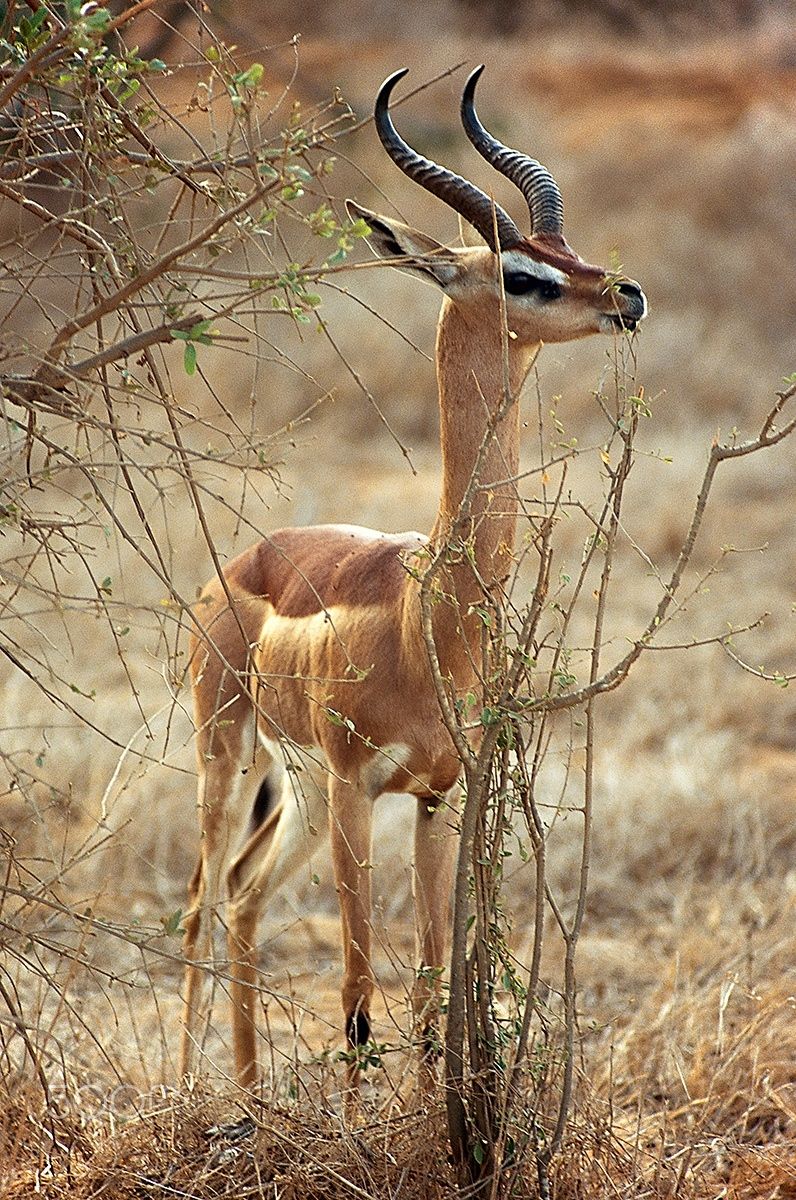
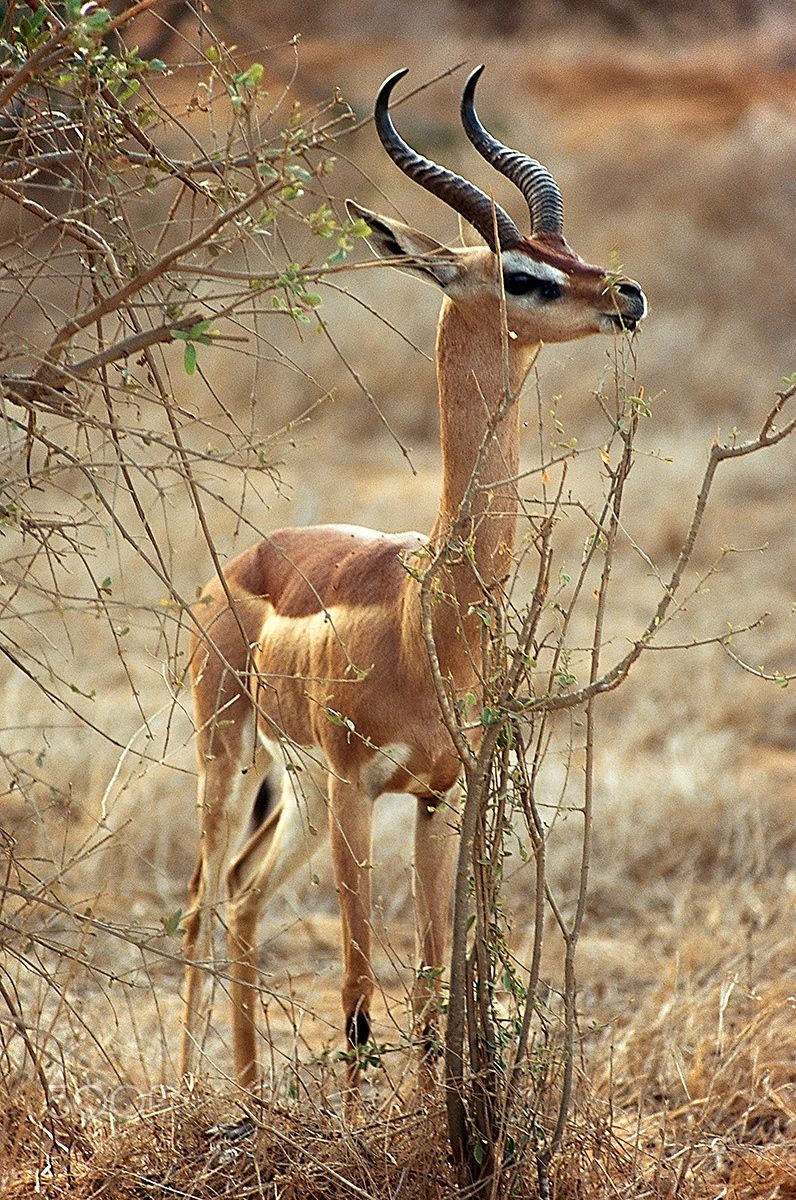
A Waller’s gazelle is something else. For starters, it is long-necked – a copycat of the giraffe to some extent. Its neck extends ahead of its body. Then, it is muscular and evidence is in its strong limbs. Above this, it has a smooth fur ranging from dark brown on its back to light brown on its sides. Its gallop is ever so graceful, boasting its uniqueness to its cousins – the gazelles.
You may have come across this wildlife at the Samburu National Reserve where it is among the famous five of the area albeit by another name.
Gerenuk is the other name given to this interesting gazelle species, but did you know that this word (Gerenuk) is actually Somali? Meaning ‘giraffe-necked’?
This animal is described as long rather than tall because of its neck and limbs that contribute to its exquisite nature. Another long feature is its snout, which is pointed – enabling it to eat the small leaves on thorny shrubs and trees. While we’re on the subject of trees, this antelope species is the only one that can reach taller branches and stands on its hind legs to do so. The manner is rather unorthodox but unique nonetheless.
The male Gerenuk is distinct in that they have heavily ringed 17-inch horns and a toned neck compared to the females. Interestingly, during gestation, the male’s neck can swell significantly. While the female stands between 80 and 100cm, the male stands between 85 and 105cm.
A common feature between this animal and most gazelles is the pre-orbital glands in front of the eyes that emit a tar-like, scent-bearing substance they deposit on twigs and bushes to mark their territory. Given that its home is in the drier area of our country, this animal survives on little water if none at all.
The gerenuk lives in a small herd of up to 10 gazelles. They are shy animals, so for the photographers that are looking into wildlife, this one requires patience and a good lens for the perfect shot. If you have the patience and long to see this beautiful species indigenous to Kenya, Ethiopia, Somalia, and Tanzania, we suggest a trip to Tsavo National Park or Meru National Park, but the Gerenuk is in plenty in Samburu.