
The story of the Rock Python
#KeWildlife – Story 12
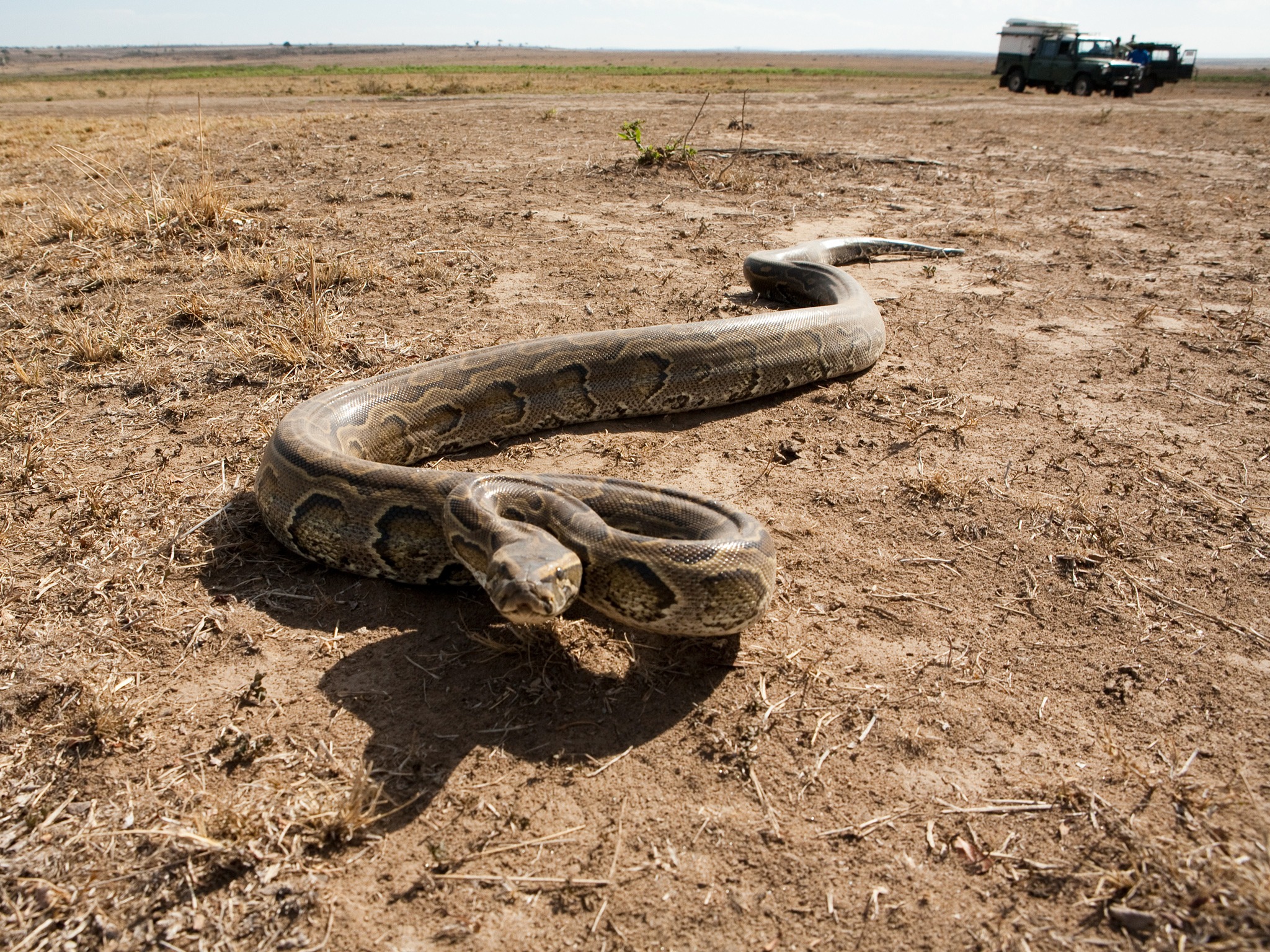
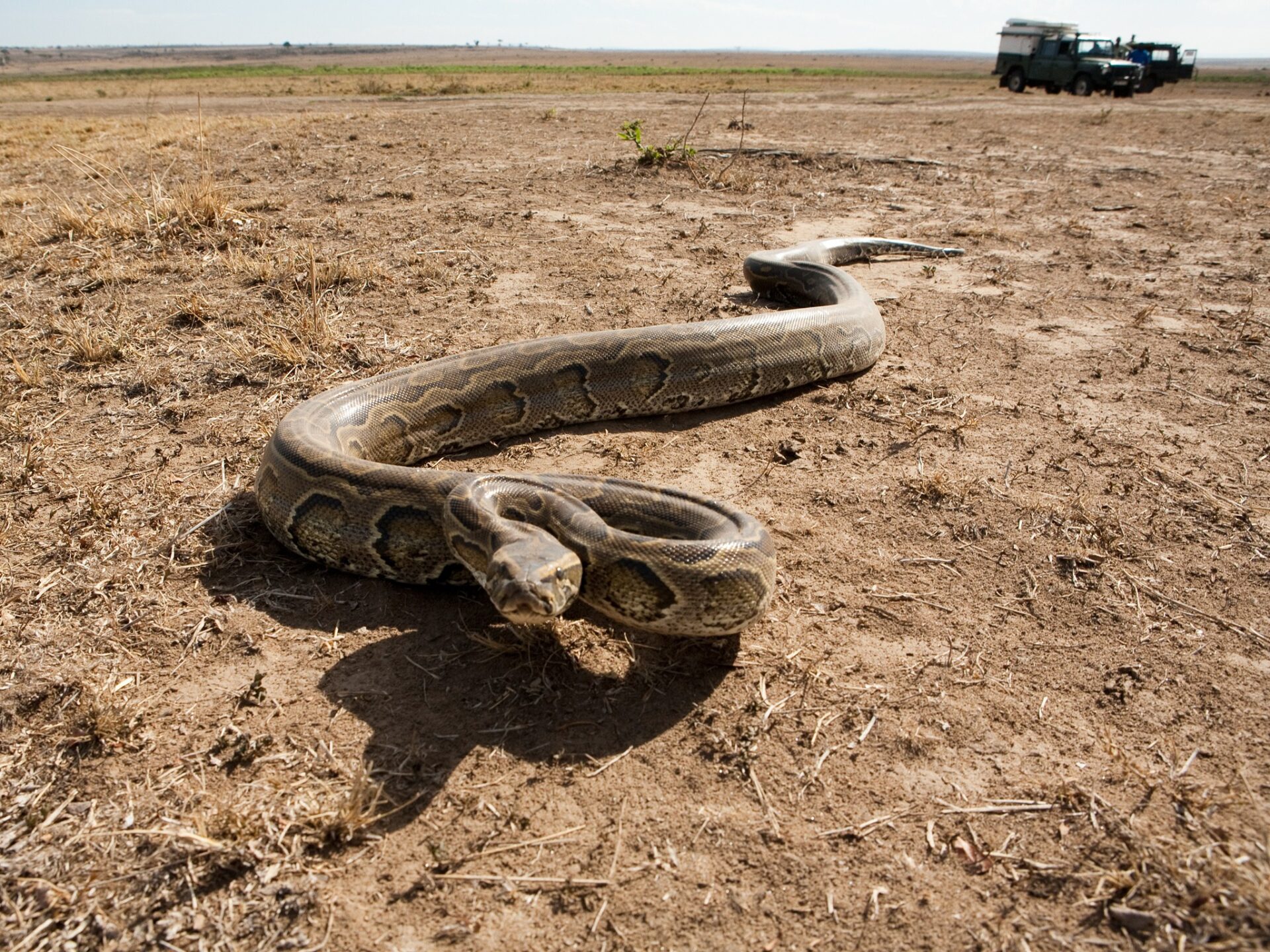
Grey, brown and bronze: a canvas of a unique kind, irregular spots blotched all over, and a triangular shaped head. One of the more distinctive features is the set of sub-ocular marks under its eyes.
An African Rock Python is both fascinating as it is deadly.
As the name suggests, this snake is indigenous to Africa and is one of two subspecies of the Rock Python. The second being the Southern Africa Rock Python found in some parts of Tanzania and in the southern region of our continent.
The automatic assumption when it comes to these scaly creatures is that one bite is all it takes to kill any person or animal, but while most snakes are venomous, the African Rock Python is different. This reptile is so long and muscular, it kills through constriction. It will wrap itself around its prey until the prey can no longer breathe – death by cardiac arrest. Its strength is evident through its ability to kill animals three times its size. However, the most common kills by the python include bushbucks, antelopes, birds, and crocodiles. The python waits underwater for the herbivores to approach a lake and then it strikes almost aggressively, swallowing the prey head-first, whole. There are few stories of surviving animals once the rock python ‘attacks’. Large meals are said to take months to digest.
While that is common for the adult rock pythons, the smaller ones feed on rodents and birds that are easy to digest. The female rock pythons lay up to 100 eggs, which they safely keep in an abandoned cave against other animals including their own kind. The snake’s length helps protect its young ones even after they hatch for up to two weeks.
This wildlife species is also particular in that during the dry season, the animal is mostly dormant.
Some African Rock Pythons have been spotted around Lake Baringo.

The story of the Giraffe
#KeWildlife - Story 11
There was a time when giraffes had short necks. It was normal of course for them to look that way because their spots made them beautiful.
On one sunny afternoon, three giraffes were playing in a place with many tall trees. One of the three decided to get up to a branch to view the landscape, but because his neck was too short, he couldn’t. He asked his playmates “Why don’t you hoist me up so that I can see the world from the top of the tree?”
Although his friends were skeptical about helping their friend with his risky idea, they helped him nonetheless. One giraffe lifted the second giraffe, who then lifted the other giraffe. He got to the top and saw all the trees that were in his view, but before he could fully enjoy the scenery, the giraffe on the ground lost her balance and fell. The second giraffe, with no support, fell as well but the third who was at the tree top didn’t fall. Instead his neck got stuck between branches.
He started to cry for the pain was unbearable. The others, unsure of what to do, went to get help.
By sundown, the giraffe was still stuck between the branches as more giraffes gathered around to see the commotion.
“We must help him. We cannot leave him up there!” suggested one giraffe. All the others present agreed. In a great community effort, one giraffe held up another and the rest pulled at the tails of the ones in front of them. Soon, the group looked like an enormous snake of giraffes.
There was minimal signs of success but unbeknownst to them, as they pulled, the giraffe’s (stuck in the branches) neck got longer and longer and longer. They only noticed when he was finally on the ground.
The young giraffe looked odd, but he was taller than the rest – and could eat the green leaves on the branches. In an amazing twist, some giraffes followed suit, only this time they purposely got stuck so that the same procedure would be applied on them. Barely a fortnight later, all the giraffe had long necks and could wander around enjoying the green leaves and the landscape of their land.
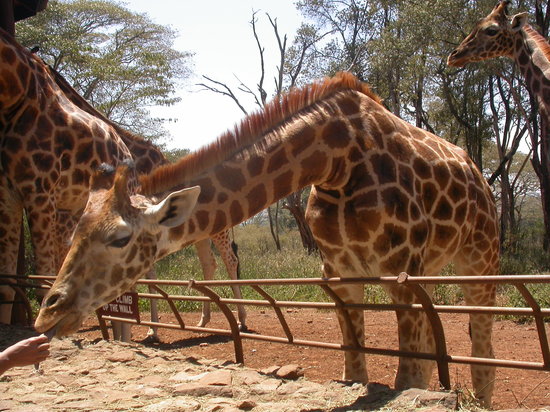
There are presently three of nine subspecies of giraffes in East Africa: Reticulated Giraffe – also known as Somali Giraffe, Rothschild Giraffe and Maasai Giraffe. Giraffes are probably the most lovable of the wildlife species. They are often friendly and enjoy being fed at various parks and centres within Kenya. And although the story says that they once looked different, we certainly cannot imagine a giraffe with a short neck. Can you?
The story of the Lion
#KeWildlife – Story 10
Angurumapo simba, mcheza nani?
A lion’s roar is so distinct, you’ll know it without thinking twice! Once you hear it, no matter how far or near it sounds, you’ll inevitably hold your breath while you attempt to make sense of the direction from which it came. Whether you decide to wait or make a run for it is completely up to you.
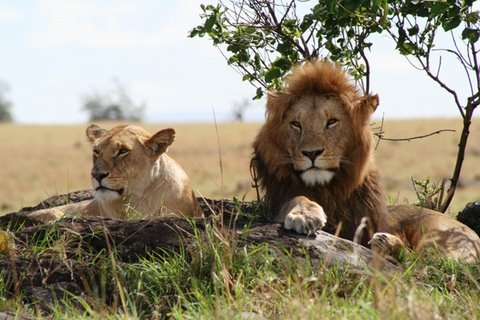
Simba, Panthera Leo or Lion – all are names of one of the most feared animals in the world.
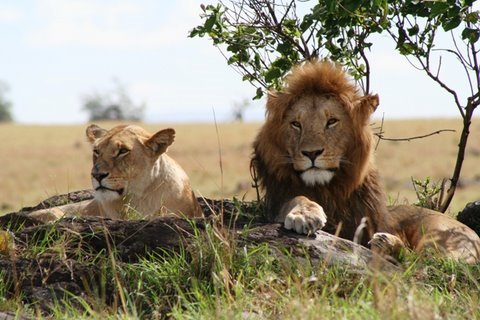
Lions live in prides, and are the only big cats that live this way. A pride, is essentially equivalent to a clan in that it consists of one to three male lions – that act as the alphas of the pack, twelve lionesses – responsible for reproduction and hunting, and the cubs of the pride.
The male lions attain their pride by overthrowing another alpha male that leads a pride. In an interesting game of loyalty, the pack follows their new alpha because of his show of strength. In some cases, the younger male cubs, grow up to overthrow the alpha and kills off all the alpha’s cubs as part of his personal initiation to alpha.
Then there’s the heart of the pride – the lionesses, who are responsible for feeding their prides. They often spend at least 4 hours a day hunting zebras, antelopes and ‘medium-sized’ herbivores. They hunt in packs because most of their prey are faster than they are – and group effort results in greater hunting success. The lionesses of the pride are all related which would probably explain their team work in hunting.
The final group within the pride are the cubs. These young ones do not go hunting until they are at least a year old, and while the female cubs grow into members of the pride, the male cubs grow into potential alphas and thus leave their original pride to go and start another. Once they do, they defend their pride territory by marking their boundaries with urine and chase off animals that dare encroach their self-designated area. Sometimes a roar can be heard and it often means that an alpha lion is scaring away intruders.
Angurumapo samba, mcheza nani?
The least known about these male big cats is that they are absolutely notorious when it comes to hunting. While the lionesses are the true hunters, the males who decide to hunt often steal kills from hyenas and wild dogs. Nonetheless, lions have been acknowledged throughout history for their bravery and strength – The King of the Savannah. However, given that the lionesses are the actual breadwinners of the family, perhaps they should take the title?
The story of the Wildebeest
#KeWildlife - Story 9
Every year, between May and July, the plains of Kenya are transformed in a wondrous way. We could credit this amazing phenomenon to our geographical location - we got lucky and the world travels to our country to experience this first hand.
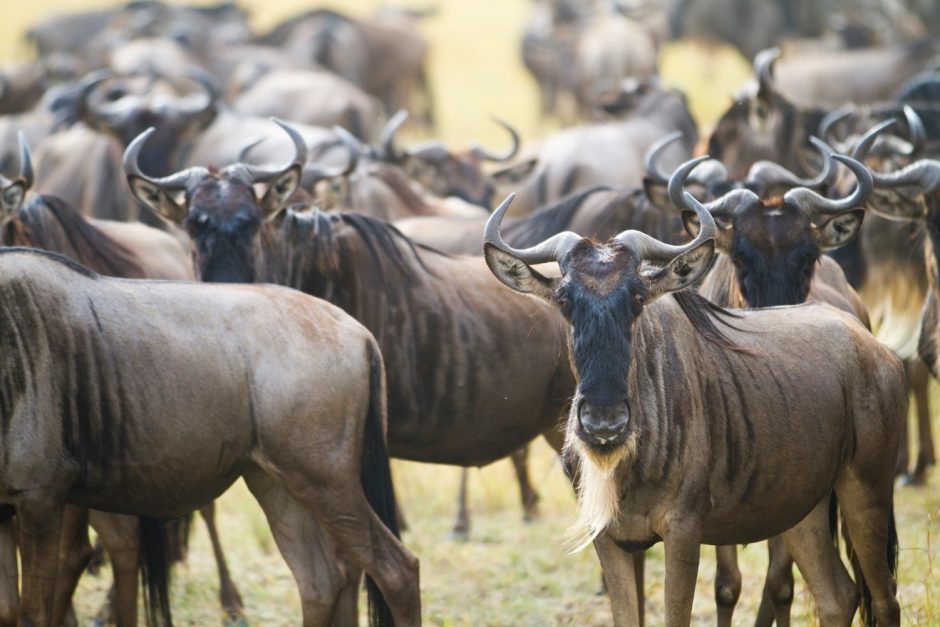
Visualise a great herd, thousands moving together as one from the Serengeti plains in Tanzania to the Maasai Mara in Kenya.
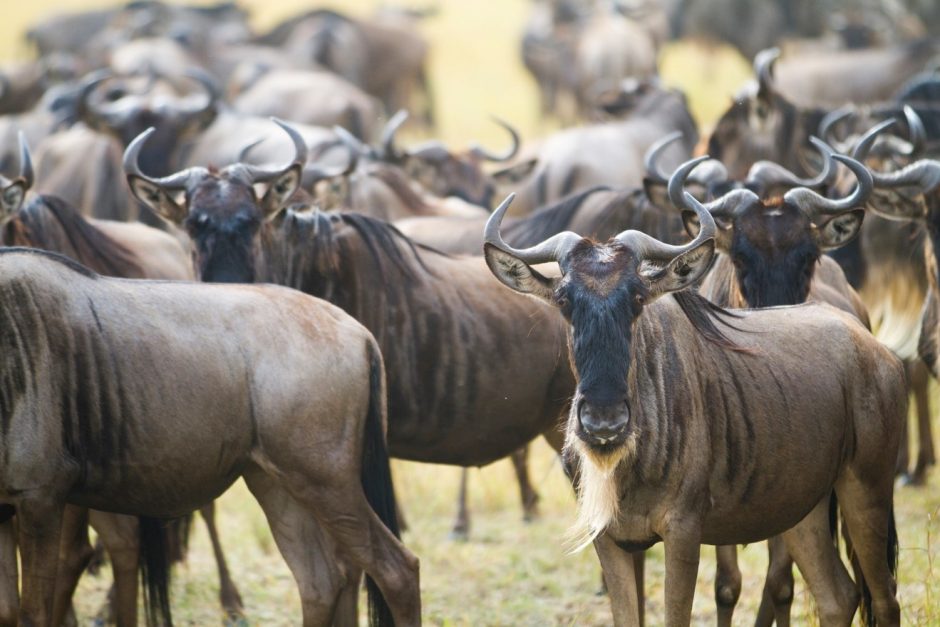
The wildebeest is one of the antelope species, well known for their dark coat and odd humpbacked appearance.
Grassy Savanna’s and open plains are the every day habitat for this group. However, the prep to migrate is something the herd anticipates every year. Unlike most communities, the gnus - or wildebeests - migration is different. While people would roam in search of greener pasture every year in revered history, these animals only know of two locations: one for the first season and the other for the second season in their animal years. We imagine that before the season dawns, many are prepared to bolt and that could mean survival (for most), and demise for the unlucky. Either way, this is a tradition or instinct that has been followed through since time immemorial.
So when the time comes more than 1.5million wildebeest are in motion in an enormous loop. It’s a run as though being chased by imaginary danger yet danger lies in their path as when the animals cross the watery zones inhabited by Nile crocs.
But not all wildebeests that die fall to the fangs of these predators, the weakest of the group may slow down and thus be trampled on by the rest of the herd. The migration isn’t just a movement to a more relaxed land, it is survival of the fittest. Literally! The unlucky in the water zones contribute to the croc’s luck, serving as the carnivore’s meal of the day. This by far goes to show that although this movement is an anticipated one by the world, it also contributes to the animal kingdom’s food chain.
Speaking of the movement, the herd which includes other herbivores such as zebras, covers approximately 3000 kilometers during the migration. The herd will then move clockwise, back south to the Serengeti and so on.
The migration is a sight to behold and brings lovers of wildlife on safari to the Kenyan-Tanzanian plains. So each year, tourists, journalists, nature gurus and others that look forward to this natural event, journey with the wildebeests in fascination.
The story of the Hippo
#KeWildlife – Story 8
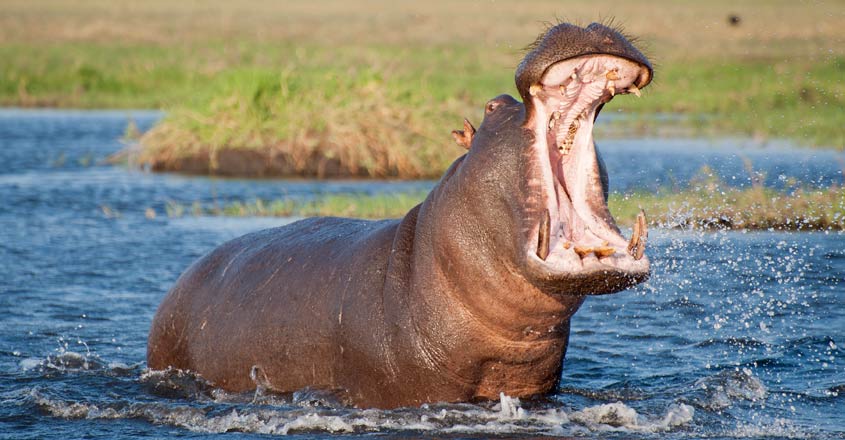
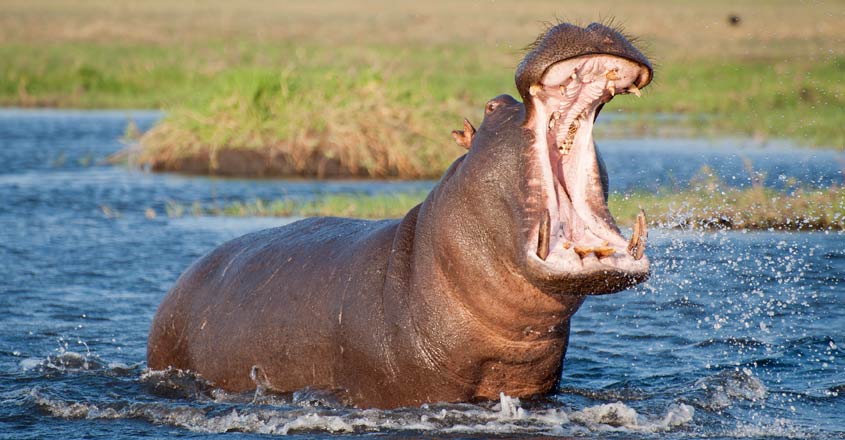
In ancient Greek, the word hippopotamus means river horse, which is undoubtedly an unlikely name for this enormous animal. While we’re on the subject of size, a hippo weighs 4,500 kilograms making it the third largest mammal on earth after whales and elephants respectively.
Hippos cannot swim which is surprising because they spend most of their time submerged in water with only their eyes above the surface. But perhaps you’d like to know why.
Paukwa?
There was a time when only animals roamed the earth. Africa was their main home and they lived amongst each other in peace. There were the animals of the land that ate the dead and others that are the leaves and branches of trees, then there were the animals of the water that ate little fish and reeds.
The land animals were known for their tough skin that would help them whenever the sun was at its peak. Although the heat would get uncomfortable, the sun rays never affected their skin. All but the hippopotamus.
The hippo’s skin lacked the strength to withstand the sun’s rays and as a result, every sunny day the hippo would be the most uncomfortable. For this reason, its skin became thinner with each passing day.
One day the hippo decided he wanted to cool his burning skin in the water and so he staggered to the nearest watering hole and asked the animals of the water if he could stay in the water with them.
“No!” the other animals said in unison.
“If we let you stay in the water with us, you will eat all our food and we won’t have enough,” said one of the water animals.
“I promise if you let me stay in the water to cool my skin, I will never touch your food. I will still eat my leaves from the land.”
The water animals were hesitant but they decided that they would only allow hippo to stay in water when he needed to cool from the sunshine. Hippo agreed to their terms and said that he would always open his big wide mouth so that they could see that he had truly not eaten the water animals’ food.
-
It’s interesting when you think about it. Today if you see a hippo’s wide mouth, it isn’t just showing the other animals that it has kept its word, rather it is warning its observer to stay away from it. With just one snap, a hippo’s canines can kill a human being. This makes it one of Africa’s most dangerous animals.
The hippo is often seen on land at night when it goes out in search of food. As for their inability to swim, these mammals stay by the edge of water bodies, where they can stand but stay in water to prevent their skin from the sun’s rays. They have the ability to close their noses and ears to prevent taking in the water, and can hold their breath for up to seven minutes.
The Tsavo East National Park, Meru National Park and Sibiloi National Park host this magnificent species and are accessible all year.
The story of the Rock Hyrax
#KeWildlife – Story 7
It’s said that over fifty million years ago before evolution took its toll, there were few species roaming the earth. As time went on and seasons changed so did the offspring of the species, and other species were born while others died or became extinct. Evolution of species resulted in the variety we have today.
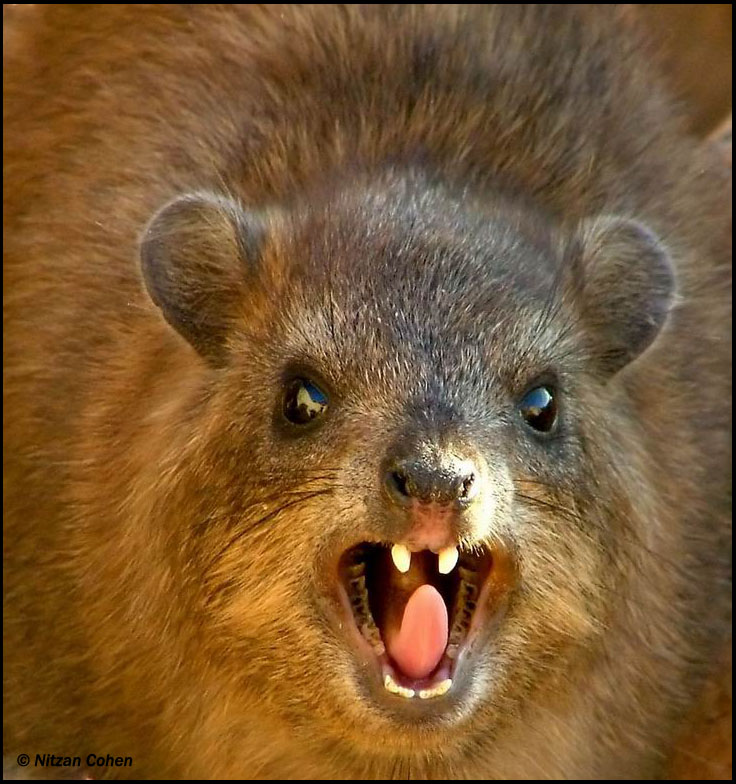
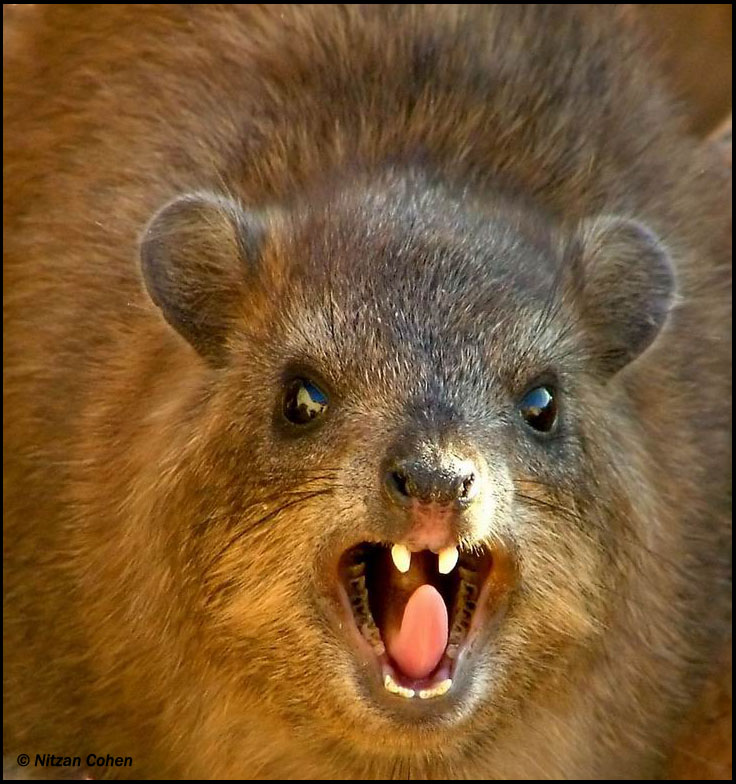
One particular species that is common today is the Procavia capensis or Rock Hyrax or Pimbi in Kiswahili.
The rock hyrax is native to over 25 African countries and is the elephant’s closest living relative. One might wonder how a rabbit look-alike is related to one of the world’s largest mammals. Well, hear it from us, the hyrax and the elephant are relas!
Although the rock hyrax is small in nature, evolution history claims that the birth and death of new species from common ancestors plus the seasonal change is what caused the difference in appearance. Additionally, interactions with varying environments played a big role in affecting the species phenotypes – the outward appearance.
The order in which hyraxes and elephants evolved remains unclear because of the mitochondrial, molecular, and other genetic evidence points in more than one direction.
The rock hyrax is so small, it weighs slightly more than - if not the same as a newborn – between 2 and 5kgs to be exact. It has no tail but its feet have a rubber-like texture that helps them climb steep rock surfaces and trees. Speaking of rocks, that’s where this type of hyrax is mostly found – on the dry rocks of the savanna. Just travel to Taita Taveta county and you will spot a cluster of rock hyrax without even trying. They’re known to be in plenty within both the Tsavo East and Tsavo West National parks.
You may, however, need to carry a pair of binoculars because for a small animal, the hyrax moves at 18kph – but if you do come across a group lounging on a rock, they could be waiting for their cousins, the elephants, so that they can possibly hold a family meeting? We can’t be certain.

The story of the Zebra
#KeWildlife – Story 6

There was a time when there were many donkeys. And when we say many, we mean that after every kilometre you would come across at least fifteen donkeys. These animals were valued by porters who would use their donkeys to carry goods over long distances every day.
Day in and day out, the donkeys toiled, but their owners – the porters – never appreciated them or let them get enough rest.
On one sunny day as a group of donkeys crossed each other’s paths, they stopped to talk.
“I’m very tired from all the work I do,” one donkey said.
“Me too,” said another. “My master never appreciates me.”
“All I want to do is relax and eat the grass without having to work ever again!” said another donkey.
And all the donkeys present agreed that they too wanted to stop working.
“But how can we get to relax when every time a porter sees a donkey, they make us work?” asked the first donkey.
“Maybe we should visit the wise, old man. He might know how to help us.” responded another.
That afternoon, as most of the donkeys were busy at work, two of the donkeys went up a green hill to visit a wise, old man who lived there. The wise, old man was respected because he cared and was kind to every man and animal. The two donkeys explained to the wise, old man their problem and the man listened and sympathized with the donkeys.
He scratched his head and bit his fingernails as he pondered on solution ideas.
Finally, “I have an idea!” the man exclaimed after a while.
“Can you help us?” asked one donkey.
“Yes I can, I’m going to get some of the paint that I have in my house and make you look less of a donkey. But once I paint you, you will never look like a donkey again.”
The donkeys brayed in excitement for they were tired of being donkeys.
The wise, old man brought out two pots of paint; one was filled with black paint and the other had white paint. He began painting the two donkeys, coating them first with the white paint and thereafter incorporating the black in form of stripes that cut through the white.
When he was done, the donkeys looked beautiful!
“You are no longer donkeys, but what shall you call yourselves?” the wise, old man asked when he was through.
The donkeys thought, and so did the old, man. “I have another idea,” said the wise, old man. “I could call you zebras!”
*
When the new zebras returned to their donkey friends, they looked less like donkeys and more like new animals. No porter asked them to work – and when the other donkeys saw this, they scrambled up the hill to the wise, old man’s house asking him to paint them too.
The wise, old man brought out his pots of paint and one by one he painted the donkeys that came. But as the day progressed, more donkeys lined up and he became tired. He started painting slower than when he began. The more donkeys that came, the impatient they got as they stood in line. When a ruffle began in the queue, one of the donkeys stepped too close to the wise, old man’s pot with white paint and the pot broke. The paint spilled all over.
“I have no more white paint!” exclaimed the wise, old man. “You have to go back as you are.”
So the donkeys that had been transformed to zebras remained as beautiful, while the impatient donkeys remained as they were and continued to labour under their porters’ schedules.
Kenya’s beautiful zebras draw in attention from miles away. You can find them grazing and lounging, enjoying the benefits of their beauty at Hell’s Gate National Park, Meru National Park and Amboseli National Park.
The story of the Rhinoceros
#KeWildlife – Story 5
Allow us to use your mind for a moment.
You are on a safari. The sun sets in the horizon and the red and orange colours have permitted the sky to look like an artist’s masterpiece. In the distance, right by a lone Acacia tree is a black-grey large animal standing silently. The wind rustles the leaves above its head and in that moment, there is complete serenity.
Wonderful, wasn’t it?
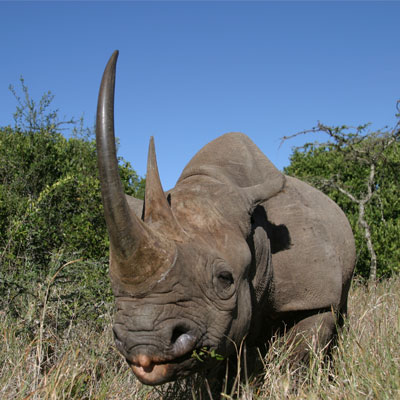
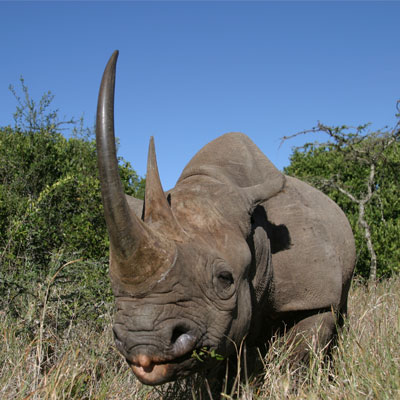
Standing at 170cm and weighing approximately 1,400 kgs, it’s no wonder the Black Rhino is one of our most outstanding animals. Having coined the term ‘Rhinoceros’ from the Greek word ‘Rhino’ to mean ‘nose’ and ‘ceros’ meaning ‘horns’, this large mammal is probably most unique for its facial features. The black rhino has two horns; one that sit above its mouth and the other between its ears.
But let’s go back to this animal’s weight – black rhinos run on their toes, which essentially goes to show their ability to carry a lot of mass. Even more interesting is the fact that a rhino can charge at 55kph if it senses something that leaves it uncomfortable. That’s a powerful tackle!
There are five types of rhino and the black rhino is the third largest of the bunch. Furthermore, the black rhino is actually a shade of dark grey and not black as its name suggests. One thing we’re certain of is that its exact colour can be spotted better up close but keep the thought that these mammals have excellent hearing but horrible eyesight, so if you aren’t careful, you could be past tense in a matter of seconds.
The black rhino’s lifespan averages between 30 and 50 years. These rhinos aren’t known to be as proactive as scavengers but they do love a good dose of plant nutrients and can eat up to 220 plant species throughout their life. They’re most commonly found eating branches, shoots and sometimes the plant’s fruit.
Kenya’s oldest black rhino, Solio, died at 42 of old age at the Lewa Wildlife Conservancy. She is definitely a rhino to remember because she was one of the few that didn’t fall to poaching. Speaking of poaching, Kenya’s black rhinos are critically endangered! Poachers are often after their horns that are then shipped to other countries where there is the common belief that they can cure certain illness. Needless to say, the hunger to claim these horns has resulted in a major population decline throughout Africa, and it is upon us to rally with the organizations such as Save The Rhino International to save this animal.
Back to the sunset we took your mind to earlier.... need to see that in real life? Black rhinos at Aberdare National Park, Tsavo East National Park and Ol Pejeta Conservancy.
The story of the Nile Crocodile
Story 4
A long time ago on a riverbank by a forest, a monkey and a crocodile formed a great friendship. The monkey would visit the crocodile often and when she came, she would bring plenty of fruit from the forest for the crocodile to eat. In turn, the crocodile would bring the monkey the largest fish he could find from the depths of the river. He would also take his friend on rides along the river where other crocodiles wouldn’t be spotted for most crocodiles loved to eat other animals.
And their friendship continued to grow.
One day Mr. Croc, as he was called, met a female crocodile, and the two instantly fell in love for no male crocodile can live alone. As they talked, Mr. Croc told his lady about his monkey friend and the kind gestures they’d show each other. Little did Mr. Croc know that his lady was a very greedy crocodile who wanted to eat the monkey because she’d heard that monkeys taste delicious.
After supper one evening she devised a plan to get Mr. Croc to bring her his monkey friend.
“My dearest, do you love me?” she asked.
“Of course I do,” he replied. “I have never met anyone as beautiful as you!”
“But you know I could be more beautiful,” she said.
“Yes. And with each day your beauty grows.”
“Thank you, but I could be more beautiful in an instant. You know what can make that happen?”
“Tell me my dear,” responded Mr. Croc.
“The heart of a monkey. Will you get me a monkey’s heart to enhance my beauty?”
“I would but I don’t know where to get one.”
“How about your friend who brings you fruits from the forest?”
“But he’s my friend, I wouldn’t do that.”
Mr. Croc’s lady sulked and cried all night until eventually he agreed to bring her his friend’s heart.
The following morning, he swam to the river bank with a serious face. When the monkey saw him, she was elated but noticed that her friend wasn’t in a good mood.
“What’s wrong Mr. Crocodile?” she asked.
“Nothing. Let’s go for a ride.”
The monkey hopped on Mr. Crocodile’s back and off they went. When she realized that they were swimming further into the river, she asked Mr. Croc why he was taking her so far. He told her the truth and she responded, “Why didn’t you tell me earlier that you wanted my heart? I keep it behind a tree at the edge of the river bank. We can go back and get it if your lady really wants it.”
At that, Mr. Croc was so excited, he took the monkey back to the riverbank. When they arrived, the monkey jumped off and turned to him.
“My heart is not here,” she said, “And I am angry at you for wanting to let your lady kill me. We are no longer friends.”
Mr. Croc swam away, sad that he had lost a friend and was about to disappoint his lady.
*
While the story teaches a lesson or two about boundaries, we could also note that it’s rare to find such a friendship in the reality of the animal kingdom.
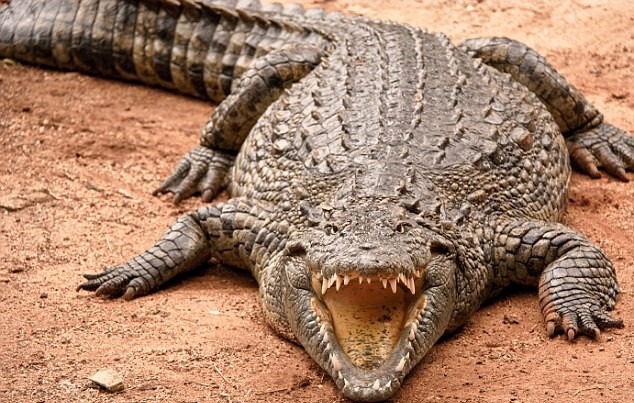
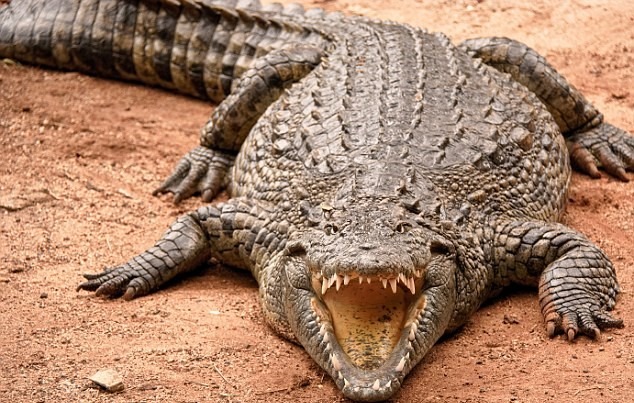
In Kenya we have the Nile Crocodile; one of three African crocodiles. This species is the largest freshwater predator and is among the world’s most deadly predators. This amphibian is also known to eat other crocodiles that are in its path and is further reputed as a man eater.
Want to see Nile crocodiles and examine their scales even closer? We wouldn’t advise you to tread near them, but you can find them at Central Island National Park in Turkana and at the Sibiloi National Park.