

#MagazetiYetu
Kenya’s earliest newspaper was established in 1902, a time before the country’s name was conceived, and when the region was still a protectorate. Nonetheless, the realities of colonialism were already setting in. With time, a resistance emerged. As some Kenyans took up arms to fight for freedom, others wielded pens, sharpening their words into weapons of knowledge.
The latter contributed to the popularity of newspapers as tools used by freedom fighters and colonialists alike to agitate for independence and spread propaganda respectively.
These histories are best captured through story. #MagazetiYetu is a Paukwa story series that chronicles the early days of Kenya’s media industry, highlighting pre-independence newspapers, their editors, their audiences, and their role in the march to uhuru.
Nothing found.


#KeMonuments
The word ‘monument’ is familiar to many. The Constitution of Kenya defines them as places or immovable structures of any age which are of public interest due to the architectural, artistic, archaeological, historic or traditional wonders attached to them. Without these sites, much of history would be lost to the marching of time.
Our monuments keep history alive by reminding us of lives and events that shaped the shared spirit of our people. Remembering history not only means we don’t repeat it. It also means we acquire the knowledge and tools to forge a future blazing with opportunity.
This series will transport you to the extraordinary events of days gone by that formed our unforgettable monuments.
Nothing found.

#KeInnovators
Technology is an ever-present feature in modern living. We all rely on certain gadgets or software to make our lives easier. The integration of tech into our daily lives makes it evident that we can use innovation for more than just recreational activities. It therefore comes as no surprise that Kenyans are at the fore of inventing homegrown solutions to challenges in the country and on the continent.
In recent years, the tech arena has grown exponentially in the country, creating platforms for enterprising minds to thrive. This has earned Kenya the name Silicon Savannah, a place where digital startups find their footing, and where innovators find market and investments for their products.
For this reason, we developed a story series to spotlight the tech whizzes in our midst: the solution architects who dare to find ways to redesign and reimagine Africa’s future positively. They are questioning standard practices in different fields, from education to health to agriculture, and proving that there is plenty of room for growth.
Welcome to #KeInnovators!
Nothing found.

#OurGreenHeroes
June every year people around the world come together to raise awareness on and celebrate environmental action. World Environment Day for us is an opportunity to spotlight the various Kenyans who have adopted the hummingbird spirit and through their daily efforts are working towards ensuring the environment is protected for future generations.
Nothing found.

#KeMadaraka
Thunder is not yet rain. This Kenyan proverb is a reminder of patience and the need to recognise a finished product versus a work in progress. When it comes to Kenya’s Madaraka Day, some may wonder why we need to celebrate the thunder that is self-governance, rather than the rain that is independence or Jamhuri.
We had the same thoughts too, but challenged the meaning behind Madaraka and decided on a reflection-like story series. Get to feel the bubbling excitement of the very first Madaraka Day and understand the established traditions that ring in the vibrant celebrations in recent years.
With these stories, we survey the expansive historical journey that spurred Kenyans towards choosing their own political and economic fate. We sift through the deeper meanings of Madaraka Day and explore why it needs to be celebrated even today.
Nothing found.

#MisemoYetu
Communication is a key part of our daily lives. Though when you think about how communication happens in Kenya, some phrases can only best be understood by us alone. These phrases consist of the way we begin conversations, the way we respond to queries, the way we summarize situations, and even the way we explain otherwise complex scenarios.
If this says anything about Kenyans, it’s that we are unique and that we find joy in the way we communicate with each other.
To celebrate this Kenyanness of ours, we invite you to our new story series, #MisemoYetu, to highlight these sayings of ours, trace back some of their origins and explore the ways these phrases continue to evolve… mko ready, fellow Kenyans?
Nothing found.

#KePoems
At Paukwa, we believe that words have inimitable power. They plant seeds of hope, and affirm our deepest griefs; they help us discover places in ourselves we didn’t know were there.
Our next story collection will celebrate all the wonderful ways that Kenyan poetry has evoked these and more. We’ve named it #KePoems, and we aim to pay homage to works that have been carefully crafted by masterful Kenyan poets throughout the ages.
These poems we will share with you are the result of a painstaking sifting through words to uncover the ones that will strike the soul just so. Their remarkable verses remind us of the potency of a well-intentioned pause and the need to open our minds to new possibilities. By holding up a mirror to our experiences and allowing us to walk in the shoes of another, Kenyan poetry has fostered understanding and profound empathy.
So, Paukwa reader, we hope that you will brood, delight, and be sincerely moved as we unearth the sensational world of #KePoems.
Nothing found.

#MitaaYetu
Our childhood experiences make up an important part of our core memories. Very often these experiences are shaped by where we grew up. In our adult life, we remember these places as much as we remember the activities we took part in and the people we spent time with.
Our earliest identities and sense of community are tied to these neighbourhoods. We never forget where we came from, which is why we’re filled with pride when we think about where we have roots.
In celebration of where we come from, we’re embarking on a story journey to visit these places Kenyans call home.
Welcome to #MitaaYetu, a series that celebrates Kenya’s unique neighbourhoods. The aim with these stories is to learn about the history of our estates, the changes they have undergone through the years, the present nature of them and the aspects that set them apart from other neighbourhoods.
Nothing found.
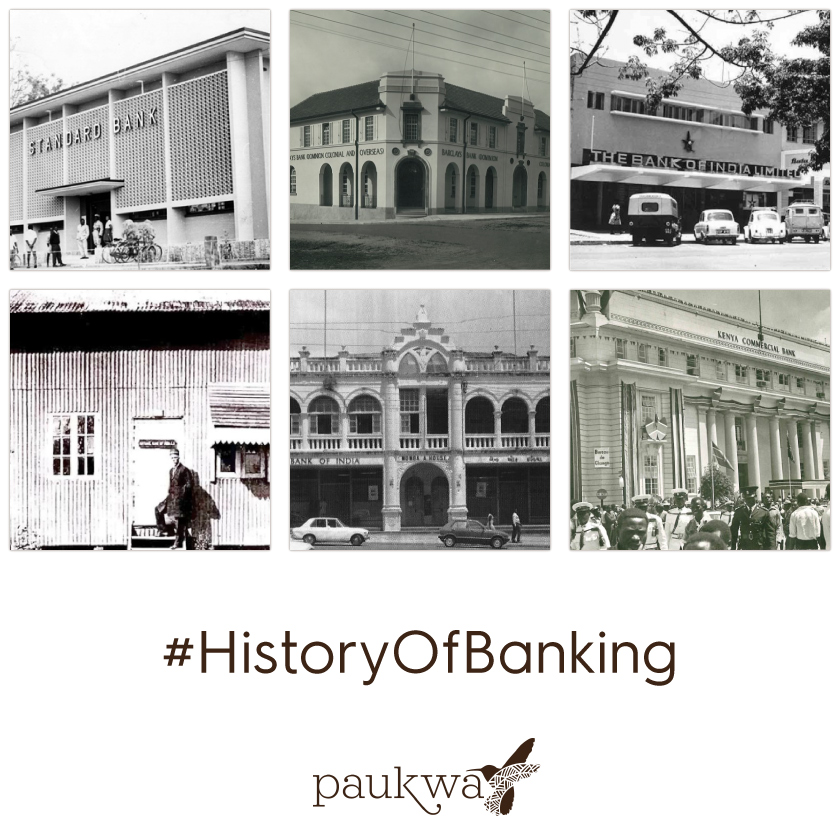
#HistoryOfBanking
Money in Kenya changed significantly over the years in the colonial era. And with these changes came the establishment of financial institutions that would accept monetary deposits and create a demand deposits. It’s no doubt that the first banks were set up to accommodate members of the colonial administration and European settlers, but as money became a commodity, more financial institutions came to be – a sign that there was demand. The questions that then come to mind are… what were the names of these institutions? What were the stories surrounding or in the lead up to their establishment? Subsequent questions have to do with when and how we came to trust banks… and who the pioneer Kenyans in banking were. For these reasons and to answer these questions, we have once again visited various archives. We now introduce you to a story collection titled #HistoryOfBanking.
Nothing found.